Skip to content

What Are the Top Solar Products for Home Worldwide?

Choosing the top solar products for home use requires more than comparing wattage or advertised savings. Climate, roof design, electricity prices, grid reliability, and household habits change the best choice. IEA PVPS Trends 2024 reported more than 400 gigawatts of new photovoltaic capacity worldwide in 2023. That scale shows strong confidence in solar, but it does not make every product suitable for every home.

The most practical category often begins with high-efficiency rooftop panels. Hybrid inverters, home batteries, solar water heaters, and smart energy monitors can add flexibility. In sunny regions, a solar water heater may reduce gas or electric demand more effectively than adding another panel. In areas with frequent outages, battery storage can protect evening lighting, refrigeration, and internet equipment. The IEA’s Renewables 2024 report identifies distributed solar as an important part of continued renewable growth, especially where consumers want greater energy independence. Still, battery value depends heavily on tariffs, temperature, warranty terms, and replacement costs.

This guide compares solar products for home applications across different markets. It considers performance, installation quality, safety certifications, maintenance, recyclability, and real operating conditions. SolarPower Europe’s Global Market Outlook 2024–2028 also highlights rapid market expansion, while warning that policy and supply-chain conditions can reshape demand. “Top” is not universal. A premium battery may be unnecessary for a small apartment, and a portable solar generator may disappoint during several cloudy days. Some product comparisons remain imperfect because manufacturers disclose different test conditions. Readers should verify local standards, installer credentials, and independent performance data before purchasing.
What Are the Top Solar Products for Home Worldwide?

What Are Solar Products for Home Use?

Solar products for home use are devices that capture, store, manage, or use electricity generated from sunlight.

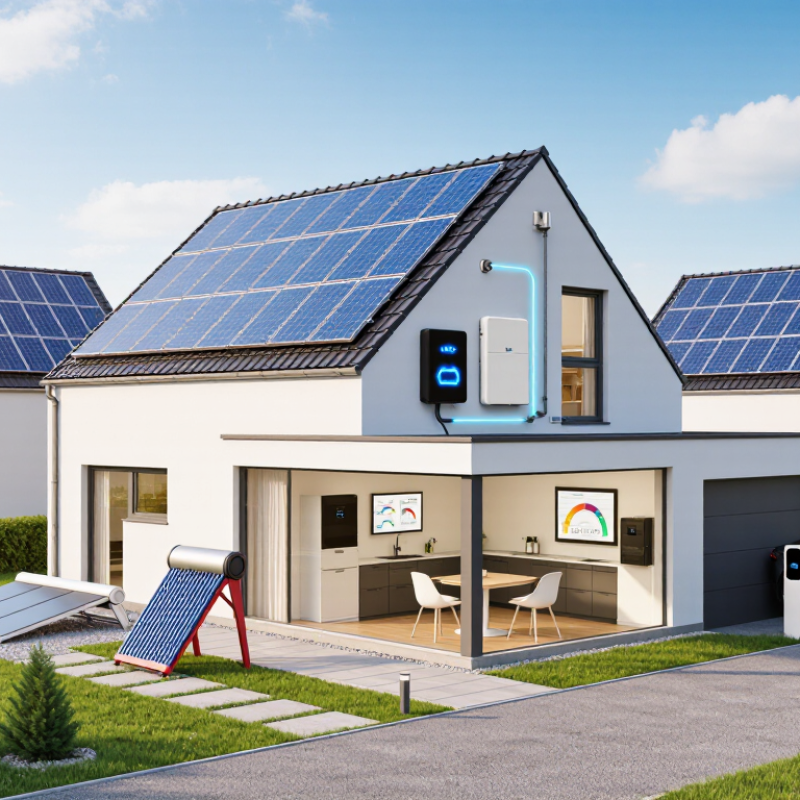
The common starting point is a rooftop photovoltaic system with panels, mounting hardware, an inverter, and monitoring equipment.

Panels produce direct current, while the inverter changes it into alternating current for household appliances.

A balcony or ground-mounted array may help homes with limited roof space, where local rules permit.

Not just panels.

Solar batteries store daytime energy for evening lighting, refrigeration, or short outages.

Battery systems need appropriate ventilation, protection, and professional installation.

Solar water heaters use sunlight differently, warming water through collectors and a storage tank.

Solar air heaters, outdoor lights, chargers, and small pumps are other household options.

A portable solar power station usually combines a battery, inverter, and charging inputs in one case. It may run a router, lamp, or small refrigerator, but not every appliance together.

Product labels can mislead.

Rated power does not equal real-world output.

Heat, shade, cable losses, and battery age reduce performance.

For example, a refrigerator may start with a brief surge above its running wattage.

That detail is easy to miss.

Choosing well requires matching household demand, roof direction, climate, and available space.

List each appliance’s wattage and daily runtime before comparing products.

A qualified installer should check structural strength, grounding, disconnects, and local electrical requirements.

Look for recognized safety testing and clear warranty terms.

I would not promise energy independence from a small system.

Cloudy weeks can expose weak planning.

Real homes are messier than product charts.

Which Types of Solar Products Are Available Worldwide?

Worldwide solar products now cover more than rooftop panels. They include monocrystalline modules, flexible panels, portable kits, solar batteries, inverters, water heaters, pumps, lights, and cooking systems. IEA PVPS reported that global photovoltaic capacity exceeded 1.6 terawatts by the end of 2023. This scale shows strong demand, but product quality still varies. A shaded roof can reduce output sharply. A small balcony system may suit an apartment better than a large array.

Solar water heaters remain important in sunny regions. REN21 reported roughly 560 gigawatts-thermal of global solar thermal capacity in 2023. These systems heat water directly, often using roof collectors and insulated tanks. Solar pumps support farms and remote communities without reliable grid access. Portable power stations serve camping, emergency charging, and temporary work areas. Battery storage adds nighttime use, but it also increases cost, weight, and maintenance needs. The numbers are not perfectly comparable. Reports use different measurement methods.

Tips: Check roof direction, shade, local weather, and household electricity use before buying. Match the inverter and battery to actual loads. Do not choose only by panel wattage. Ask for safety documents, warranty terms, repair access, and recycling guidance. My practical mistake would be sizing storage from peak demand alone. Evening habits matter more. A professional site assessment is still worthwhile, especially for older roofs or complex wiring.

How Do Residential Solar Products Work?

A residential solar system turns sunlight into usable electricity through several connected components. Photovoltaic cells absorb photons and create direct current. An inverter then converts it into alternating current for household appliances. According to IRENA’s Renewable Capacity Statistics 2024, global solar capacity reached about 1,419 gigawatts by the end of 2023. This growth reflects improved module efficiency and wider home adoption.

The inverter manages power quality and synchronizes the system with the utility grid. Extra electricity can flow into the grid, depending on local rules and metering arrangements. A battery stores surplus energy during sunny hours. It can later support lighting, refrigeration, or internet equipment after sunset. Storage changes the timing. The U.S. National Renewable Energy Laboratory reports that battery performance depends strongly on temperature, cycling, and system design.

Home monitoring software displays production, consumption, and battery status in near real time. A practical installation should face minimal shading and use a properly sized inverter. Oversizing panels without checking roof strength or electrical limits can create avoidable problems. That detail is often underestimated. Energy savings also vary with weather, household habits, tariffs, and maintenance. Reported performance may look impressive, but real homes are less predictable than test conditions. Professional site assessments and verified technical documentation remain essential before installation.

How Should Homeowners Compare Solar Products?

How Should Homeowners Compare Solar Products?

Comparing solar products starts with your home, not a glossy specification sheet. Measure the roof’s usable area, direction, shading, and seasonal sunlight. A smaller, efficient panel may outperform a larger panel under partial shade. Ask for estimated yearly energy production, not only peak wattage. Check whether the estimate uses local weather data and your actual roof angle.

Look closely at the inverter, battery, mounting system, and monitoring software. These parts work together, and one weak component can reduce the system’s value. Compare efficiency at high temperatures, because rooftop equipment can become extremely hot. Review safety certifications, weather resistance, repair procedures, and replacement costs. A long warranty matters only when its terms are clear and the provider remains reachable.

Read the installation proposal slowly. It should show labor, permits, grid connection work, expected maintenance, and removal costs. I once saw a low quote exclude roof reinforcement, which changed the final budget. Cheap is not always practical. Ask how the installer handles snow, heavy rain, salt air, or dust in your area. Battery claims also deserve caution; usable capacity differs from advertised capacity. A simple spreadsheet helps, but it can still miss roof repairs, changing electricity rates, and delayed approvals. Get several written estimates and question every assumption.

What Factors Affect Solar Product Selection by Region?

Home solar products vary because regional conditions matter more than product popularity. Rooftop photovoltaic systems suit sunny areas with reliable grids and usable roof space. Battery storage becomes more valuable where power outages or evening electricity prices are common. In remote regions, compact off-grid kits can serve lighting, phone charging, and small appliances. Solar water heaters may be practical in homes with high hot-water demand. They are less useful where winter sunlight is weak or installation skills are limited.

Solar resource is only one factor.

The International Renewable Energy Agency reported 1,419 gigawatts of global solar capacity by the end of 2023, showing rapid market expansion. However, strong growth does not guarantee equal household benefits. The IEA Photovoltaic Power Systems Programme reported roughly 456 gigawatts of new photovoltaic capacity in 2023, with policy and financing shaping adoption.

Roof angle, snowfall, humidity, dust, and local building rules also affect system design. A coastal home may need corrosion-resistant equipment. A dusty rural home may need simpler maintenance.

Cost assumptions can mislead.

A cheaper panel may perform poorly under heat, shading, or weak service support. I would check local installer experience, warranty conditions, battery safety, and replacement access before comparing prices. This is often overlooked.

Regional electricity tariffs should guide storage decisions, while water demand should guide solar-thermal choices. The best product is not always the most advanced one; it is the system that matches local weather, household habits, grid reliability, and long-term maintenance capacity.