China Top Solar Energy Panels Suppliers for Global Buyers
Global buyers are paying closer attention to China’s solar manufacturing strength and supply capabilities. China remains a major source of solar energy panels for residential, commercial, and utility-scale projects. Its suppliers offer varied technologies, production volumes, and price levels. However, choosing a suitable partner requires more than comparing online quotations.
This guide examines China’s leading solar energy panels suppliers through practical purchasing criteria. These include cell technology, module efficiency, degradation rates, warranties, factory capacity, and delivery experience. Buyers should request current test reports, product datasheets, and certification records before making decisions. Factory audits can reveal details that brochures often miss, such as cleanliness, quality-control routines, and packaging standards. Small details matter.
Experienced importers also evaluate communication, after-sales support, and replacement procedures. A responsive sales team may prevent costly delays when containers arrive with damaged packaging. Buyers should confirm Incoterms, payment stages, insurance responsibilities, and expected production schedules in writing. Local climate conditions deserve attention too. Panels installed in coastal areas may require stronger corrosion resistance, while hot regions can experience higher power losses. Independent inspections remain valuable, although they cannot remove every commercial risk.
No supplier is flawless. Some performance claims remain difficult to compare because testing conditions differ between manufacturers. The most reliable decisions combine documented evidence, technical advice, and realistic project calculations. This overview aims to help global buyers identify capable Chinese suppliers without relying on price alone. Careful verification takes time. It can protect long-term energy output, investment value, and customer trust.
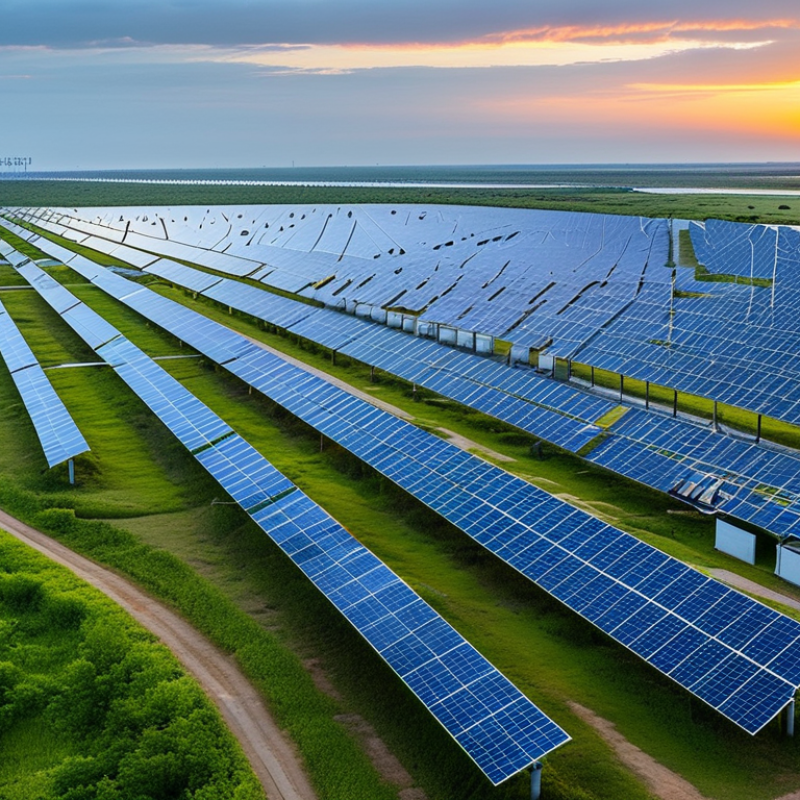
China’s PV Lead: Over 80% of Global Manufacturing Capacity (IEA 2024)
China’s solar manufacturing base now shapes procurement decisions worldwide.
The IEA’s Renewables 2024 analysis reports that China holds over 80% of global solar PV manufacturing capacity. This lead covers polysilicon, wafers, cells, and modules. It also supports dense supplier networks, specialized equipment, and faster production scaling.
The numbers are substantial.
IRENA recorded about 216.9 GW of solar capacity additions in China during 2023. Global additions reached roughly 345.5 GW that year. For buyers, this scale can mean broader specifications, larger order volumes, and shorter production schedules.
However, capacity is not the same as consistency. A factory may quote excellent efficiency figures, yet shipment quality can vary between production batches.
Practical due diligence remains essential.
Buyers should request independent laboratory reports, factory audit records, and traceability documents. Testing should cover power tolerance, degradation, humidity resistance, and mechanical loading. The IEA’s Solar PV Global Supply Chains analysis also warns about geographic concentration and supply-chain exposure. One source can look efficient on paper. It may still create operational risk. Site visits, sample testing, and contract-based quality controls reveal details that brochures often miss. Procurement teams should also examine warranty terms, recycling responsibilities, and local compliance requirements before approving large shipments.
Compare TOPCon, HJT and PERC Modules by 22–24% Efficiency
For global buyers, module efficiency now sits between 22% and 24% in many commercial product lines. The choice is not only about the highest number.
PERC
PERC modules typically reach about 21%–22.5% efficiency. Their manufacturing base is mature, but rear-side performance and long-term degradation require careful review.
TOPCon
TOPCon modules commonly achieve 22%–23.5%, according to recent International Technology Roadmap for Photovoltaic reports. They offer stronger bifacial gains and improved temperature performance than conventional PERC designs.
HJT
HJT modules often reach 22.5%–24%, with low temperature coefficients and useful output in hot climates. Fraunhofer ISE’s Photovoltaics Report also identifies heterojunction technology as a high-efficiency pathway, although production costs and process complexity remain important concerns.
Field conditions change the ranking. A rooftop with limited space may value HJT’s higher efficiency. A utility project may prefer TOPCon’s balance of yield, cost, and bifacial response. PERC can still fit price-sensitive projects, but buyers should examine degradation warranties, low-light data, and independent test results. Small details matter.
According to the International Energy Agency Photovoltaic Power Systems Programme, module reliability depends on climate, installation quality, and operating stress, not efficiency alone. Ask for temperature-coefficient data, annual degradation rates, and third-party certification. I would also compare measured power at 25°C and realistic operating temperatures. Laboratory results can look perfect. Real roofs are less polite.
Verify Suppliers with IEC 61215/61730, ISO 9001 and Bankability Metrics
China Top Solar Energy Panels Suppliers for Global Buyers
Reliable sourcing starts with evidence, not attractive quotations. Ask suppliers for current IEC 61215 and IEC 61730 certificates. IEC 61215 supports design qualification and type approval. IEC 61730 addresses module safety requirements. Check the certificate holder, factory address, model range, and expiration date. A certificate may not cover every production line.
ISO 9001 shows a documented quality management system. It does not guarantee perfect panels. Request recent audit records, incoming material checks, EL testing images, and flash-test samples. During factory visits, inspect clean assembly areas, barcode tracking, and storage conditions. Bankability needs wider evidence. Review operating history, warranty claim ratios, degradation data, insurance support, and audited financial information. Independent technical due diligence can expose risks hidden in sales presentations. Still, no metric predicts every future failure.
Tips: Compare certificates with the exact module model. Ask for third-party test reports. Check serial-number traceability. Request references from projects operating for several years. Keep questions in writing. Small gaps matter. One weakness remains common: buyers sometimes verify documents but ignore after-sales capacity. Confirm spare-part access, response times, and the legal entity issuing warranties before signing.
Assess Module Prices Near $0.10/W and the Complete Landed Cost
China Top Solar Energy Panels Suppliers for Global Buyers
A module quote near $0.10/W attracts attention, but it is only a starting signal. A 550 W panel may appear to cost $55 before shipping and other charges. Experienced buyers should request the exact specification, production date, warranty terms, and test documents. Small differences in efficiency, glass, frame, and tolerance can change the practical value.
The complete landed cost includes ocean freight, cargo insurance, export handling, destination port fees, customs duties, taxes, inspection, inland delivery, and financing. Packaging also matters. A container with poor loading efficiency can raise the cost per watt. For example, a 100 kW shipment may need a spreadsheet showing every charge in dollars per watt. Use the agreed Incoterm carefully. A low factory price can hide expensive destination responsibilities.
Do not trust one freight quote. Rates change quickly. Verify local import rules, tax treatment, and approved documentation before payment. Keep a buffer for demurrage, currency movement, and damaged units. This is not elegant, but it is realistic. A useful calculation is total landed cost divided by received, inspected wattage, not ordered wattage. Missing modules or delayed clearance can quietly weaken the original deal. The $0.10/W figure may survive review, or it may not.
Shortlist Exporters by 25–30-Year Warranties, MOQ, Lead Time and Service
China Top Solar Energy Panels Suppliers for Global Buyers
Shortlist exporters by warranty, MOQ, lead time, and service rather than catalog price alone. The IEA PVPS Trends 2024 report recorded more than 400 GW of global photovoltaic additions in 2023, with total capacity exceeding 1.6 TW. That scale increases choice, but it also makes supplier verification harder. A 25–30-year performance warranty usually covers gradual power degradation, not every failure. Ask for separate product warranty terms, degradation rates, claim procedures, and the legal entity issuing the documents.
MOQ and lead time need practical checks. Some exporters accept one mixed container, while others require larger repeat orders. Confirm module wattage, pallet quantity, container loading, Incoterms, and production slots in writing. For standard modules, a four-to-eight-week lead time may be possible, but factory congestion and port schedules can extend it. Request recent inspection records, IEC certification evidence, serial-number tracking, and references from comparable overseas projects. IRENA’s Renewable Capacity Statistics highlights continuing global deployment growth, yet fast growth does not guarantee consistent after-sales support.
Tips: Compare three written quotations using the same specifications. Check whether the 30-year warranty is transferable. Ask who pays inspection and transport costs during a claim. Keep a small sample batch before committing to a full container. A low MOQ sounds attractive, but weaker pricing or slower service may follow. I would also treat unusually short lead times carefully; they may reflect available stock, not fresh production.
China Top Solar Energy Panels Suppliers for Global Buyers - Shortlist Exporters by 25–30-Year Warranties, MOQ, Lead Time and Service
Indicative export-market benchmarks for evaluating solar panel supplier offers. Warranty refers to the typical product and performance warranty period; MOQ, lead time and service response are shown in practical purchasing units.
Longer warranties, lower MOQs, shorter lead times and faster service response generally indicate greater flexibility for global buyers. Final terms should be confirmed in the supplier quotation and contract.