Skip to content

China Top Solar Panels for Homeowners How to Choose?

Choosing the right solar panels for homeowners in China requires more than comparing price tags or wattage. A panel may look impressive online, yet perform differently under heat, dust, shade, and seasonal rain. This guide examines practical selection factors, including efficiency, durability, warranty coverage, and after-sales support. It focuses on real household needs rather than showroom promises.

China has many established solar manufacturers, but quality varies between product lines. Homeowners should check independent certifications, published performance data, and the manufacturer’s operating history. Look for clear details about degradation rates, temperature coefficients, fire safety, and resistance to wind or snow loads. A long warranty helps, but the warranty provider and claim process matter just as much. Fine print matters.

Roof direction, available space, and local sunlight can change the best choice. For example, a small roof may benefit from high-efficiency panels, while a larger roof could prioritize value and easier maintenance. Shading from trees or neighboring buildings also affects output. An experienced installer should inspect the roof, calculate expected annual production, and explain inverter compatibility before recommending equipment. Do not rely on a generic system size.

The strongest decision combines reliable products with careful installation and realistic savings estimates. Energy prices, household consumption, battery use, and grid rules should be considered together. Some recommendations may seem convincing but deserve a second look. Product rankings can become outdated, and laboratory results cannot perfectly predict every home’s performance. By comparing evidence, asking precise questions, and planning for long-term service, homeowners can select a safer and more dependable solar investment.
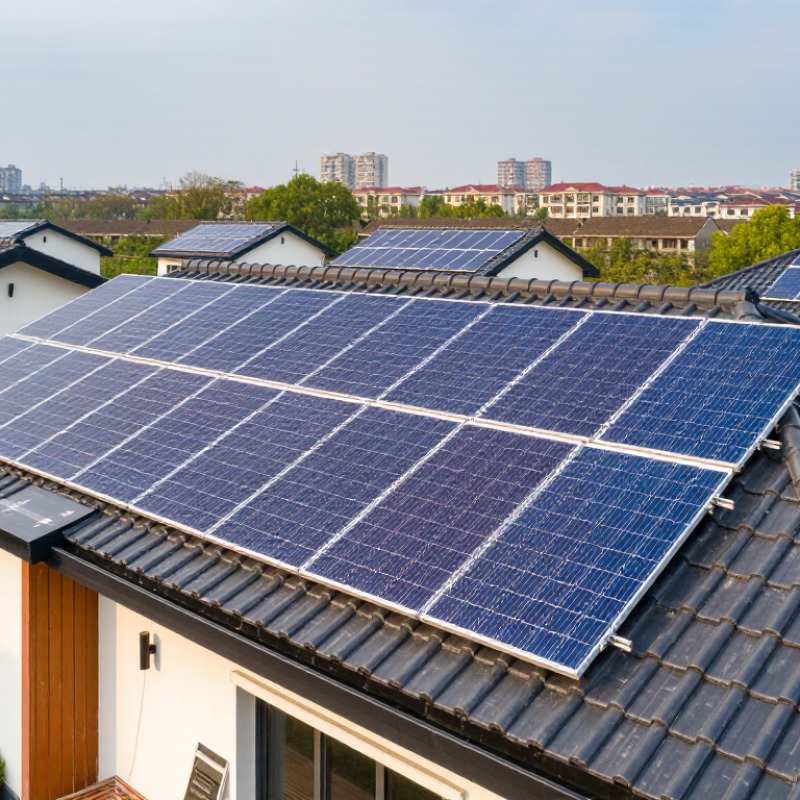
China Top Solar Panels for Homeowners How to Choose?

What Makes Chinese Solar Panels Suitable for Home Use?

Chinese solar panels can be suitable for home use because manufacturers produce many models for different climates and roof sizes. Their large production scale often supports competitive pricing and steady availability. However, low cost alone should not decide a purchase.

A reliable panel should have documented testing under recognized international standards. Check its temperature coefficient, power tolerance, fire rating, and expected annual degradation. These details matter on a dark roof reaching high temperatures in summer. A panel with strong heat performance may produce more electricity during long, hot afternoons. Homeowners should also confirm that the inverter matches the system’s voltage and household demand.

Installation quality is equally important. A shaded roof, weak mounting system, or poorly planned cable route can reduce performance. Local weather deserves attention too. Homes in snowy areas need suitable load ratings, while coastal properties may require stronger corrosion protection. Warranty terms should clearly separate product coverage from performance guarantees. Read the conditions carefully.

I once assumed similar wattage meant similar value. It does not. Independent test data, installer experience, and clear after-sales support can reveal important differences. A careful buyer should compare complete system costs, not just the panel price. Local electrical rules and grid requirements must also be checked before installation. Performance may vary, even when two panels look almost identical.

How to Compare Solar Panel Types, Efficiency, and Power Ratings

Choosing China’s top solar panels for a home starts with three figures: type, efficiency, and power rating. Monocrystalline panels usually suit limited roofs because they produce more electricity per square meter. Thin-film panels can perform better in some low-light conditions, but they often need more space.

According to Fraunhofer ISE’s Photovoltaics Report 2024, commercial crystalline-silicon modules generally achieve about 19% to 23% efficiency. Laboratory cells perform far higher. That gap matters.
Efficiency shows how much sunlight becomes electricity. Power rating, measured in watts, shows the panel’s output under standard test conditions.

A 450-watt panel does not deliver 450 watts all day. Heat, dust, shading, cable losses, and roof direction reduce actual production. The IEA PVPS Trends in Photovoltaic Applications 2024 report notes the continuing move toward larger, higher-power modules.

Bigger is not always better. A large panel may leave awkward gaps around vents or roof edges.

Check the temperature coefficient, warranty terms, and measured output in cloudy weather. Lower temperature losses help during hot summers. For a small roof, compare annual kilowatt-hours per square meter, not efficiency alone.

Real roof measurements are more useful than showroom numbers. I sometimes see homeowners choose maximum wattage and ignore shade from a nearby tree. That is a costly mistake.

NREL’s PVWatts guidance also stresses that orientation, tilt, and local weather strongly affect energy estimates. Ask for a site-specific simulation, then question its assumptions.

Which Certifications and Quality Standards Should Homeowners Check?

For homeowners choosing top solar panels, certifications deserve close attention. Look for IEC 61215 for design and performance testing. IEC 61730 addresses electrical and fire safety. Check the exact standard number, not just a “certified” label.

A certificate alone proves little. I once assumed it guaranteed long-term performance. That was too simple. Request the certificate number, testing date, and issuing laboratory. The laboratory should follow ISO/IEC 17025 requirements. Compare the document with the panel’s model and serial information. A mismatched model is a warning sign. Also inspect the product warranty, installation instructions, and degradation guarantee. Short documents can hide important exclusions.

Confirm whether the panel meets local electrical and building rules. Some regions may require additional safety marks, grid approvals, or fire classifications. Ask who accepts the certification in your area. Read the warranty conditions carefully, especially coverage for labor, transport, and replacement. If the seller avoids specific answers, pause before paying. One caution: certification is not the same as perfect quality. Manufacturing controls, traceable materials, and realistic performance data still matter. A panel may pass testing yet disappoint when shade, heat, or poor installation affects output. This practical detail is easy to overlook.

China Top Solar Panels for Homeowners: How to Choose? Which Certifications and Quality Standards Should Homeowners Check?
Certification or Standard What It Verifies Why It Matters to Homeowners What to Check Before Buying Priority
IEC 61215 Design qualification and type approval for crystalline silicon and other terrestrial photovoltaic modules under defined environmental and electrical stress tests. Helps confirm that the module design has been evaluated for common outdoor conditions such as temperature changes, humidity, mechanical loading, and ultraviolet exposure. Request a current test report or certificate that identifies the exact module model, technology, power range, and applicable edition of the standard. Essential
IEC 61730 Module safety qualification, including protection against electric shock, fire-related hazards, insulation failure, and mechanical safety risks. Addresses safety risks that are separate from energy performance, which is especially important for rooftop systems installed near homes and people. Confirm that the certificate covers the complete module construction, including the stated module class and system voltage rating. Essential
UL 61730 North American photovoltaic module safety requirements covering construction, electrical protection, fire-related characteristics, and mechanical safety. Often required or preferred by authorities, utilities, insurers, and installers for residential systems in the United States and Canada. For North American installations, verify certification by an accredited conformity-assessment organization and confirm that the exact module model appears in the certification listing. North America
IEC 62941 Quality-system guidelines for photovoltaic module manufacturing, including process control, traceability, change management, testing, and corrective actions. Provides additional confidence that production quality is managed consistently rather than relying only on testing of a sample design. Ask for evidence of an implemented PV-module quality system and review how serial numbers, material changes, complaints, and warranty claims are controlled. Recommended
ISO 9001 A general quality-management-system standard covering documented processes, customer requirements, internal audits, corrective actions, and continual improvement. Can indicate disciplined manufacturing and customer-service processes, although it does not by itself prove module performance or long-term reliability. Check the certificate scope, issuing certification body, validity dates, manufacturing location, and whether photovoltaic module production is included. Recommended
CE Marking Manufacturer declaration that the product meets applicable European Union requirements, which may include electrical safety, electromagnetic compatibility, and chemical restrictions. Relevant for products placed on the European Economic Area market, but it is not a standalone test result or universal proof of solar-module quality. Request the EU Declaration of Conformity and verify the applicable directives or regulations instead of accepting a CE logo alone. European Market
IEC 61701 Resistance of photovoltaic modules to salt-mist corrosion under defined laboratory exposure levels. Useful for homes near coastlines, saltwater, roads treated with de-icing salts, or other environments where corrosive deposits may accumulate. Confirm the tested severity level and ensure the module’s frame, fasteners, connectors, and mounting system are also suitable for the site. Site-Dependent
IEC 62716 Resistance of photovoltaic modules to ammonia exposure, which can be relevant in agricultural or livestock environments. Helps assess whether module materials are suitable for locations with persistent ammonia vapors from animal housing or manure storage. Request the ammonia-resistance test evidence and check whether the frame, seals, junction box, and connectors have compatible material specifications. Site-Dependent
IEC 60068-2-68 Testing guidance for dust and sand exposure, including environmental stress that may affect outdoor electrical equipment. Relevant for dry, desert, dusty, or agricultural areas where abrasive particles and dust accumulation may increase maintenance needs. Review the stated test method and site suitability, and ask about cleaning requirements, drainage, and protection of connectors and junction boxes. Site-Dependent
Module Fire Classification Fire-performance classification under the rules applicable to the installation market, roof construction, and mounting configuration. Can affect whether a module is permitted on a particular roof and whether it satisfies local building, fire, or insurance requirements. Confirm the required classification with the local authority, installer, or insurer; do not assume that a fire rating applies to every roof assembly. Check Locally
Independent Performance Testing Third-party verification of rated power, electrical characteristics, degradation behavior, and selected reliability tests. Reduces reliance on marketing claims and helps compare modules using evidence tied to the exact product model. Look for reports from an appropriately accredited laboratory, model-specific results, test dates, measurement uncertainty, and clearly defined test conditions. Recommended
Warranty Documentation Written product warranty and performance warranty defining coverage period, degradation limits, exclusions, remedies, and claim procedures. Shows the practical level of protection available if a module fails or its output declines faster than the stated limit. Read the legal entity providing the warranty, transferability, labor and shipping coverage, degradation schedule, exclusions, and dispute process. Essential
Certification requirements vary by country, utility, roof type, and local building codes. A certificate should always identify the exact module model and a valid testing or certification body; a logo alone is not sufficient evidence of compliance.

How to Evaluate Costs, Warranties, Installation, and Supplier Support

Choosing top solar panels for a home requires more than comparing efficiency percentages. EnergySage’s 2024 Solar Marketplace Intel Report placed many residential quotes near $2.80 per watt before incentives. However, the cheapest quote may exclude roof repairs, electrical upgrades, monitoring, or permit fees. Ask for an itemized proposal showing panel capacity, inverter type, labor, taxes, and expected annual production. The IEA PVPS Trends 2024 report recorded over 450 gigawatts of new solar capacity worldwide in 2023, yet local installation quality still varies sharply.

Read warranties separately. A panel may offer 25 years of performance coverage, while workmanship protection lasts only a few years. Check who handles claims, where support is located, and whether labor remains covered. Request the exact degradation rate, service response time, and replacement process. A long warranty is not automatically strong.

Installation deserves a physical review. Inspect roof age, shade from trees, cable routing, drainage, and the main electrical panel. Ask for permit responsibility and a commissioning report. NREL’s PVWatts guidance shows that shading, tilt, weather, and system losses can materially change production estimates. Supplier support matters after the crew leaves. Look for remote monitoring, a named contact, and written escalation procedures. My checklist is imperfect; real roofs often expose assumptions that sales software misses.

How to Choose the Right Chinese Solar Panel for Your Home?

Choosing the right Chinese solar panel starts with your roof, not a product list. Measure usable roof area, shade, pitch, and structural capacity. A 450-watt panel may look attractive, yet its dimensions can leave awkward gaps. Check efficiency, temperature coefficient, and expected degradation. In hot climates, lower temperature losses can matter more than peak wattage. Small details matter. Ask for a current datasheet, IEC test certificates, factory quality records, and serial-number traceability. Do not rely on marketplace claims alone.

Match the panel with a compatible inverter, mounting system, and local electrical requirements. A qualified installer should calculate annual yield using roof direction, seasonal shadows, and household consumption. Request an itemized quote covering freight, installation, permits, monitoring, and replacement labor. Review product and performance warranties carefully. A long warranty has little value if the seller lacks clear claim procedures or regional support. Check whether spare panels and compatible components will remain available years later.

A practical mistake is choosing maximum power while ignoring roof layout. A stronger specification may produce less useful energy after shading and poor spacing. That lesson is easy to miss. Compare at least three technical offers. Verify independent test evidence where possible, and ask who handles failures after installation. Manufacturing quality can vary between factories and production batches. A less powerful panel with better documentation, stable supply, and transparent support may serve your home better. Allow room for doubt, because solar estimates are never perfectly certain.

How to Choose the Right Chinese Solar Panel for Your Home

Representative residential module efficiency by cell technology

Higher module efficiency can produce more electricity from limited roof space. For most homeowners, n-type TOPCon, HJT, and back-contact technologies generally offer higher efficiency than traditional mono PERC modules. When comparing panels, also check temperature coefficient, product warranty, degradation rate, dimensions, local certifications, and installer quality.

The figures show representative current residential-market efficiency levels and are intended for technology comparison rather than brand ranking.