Why Choose Solar Energy Panels for Your Business?
For many businesses, the question is no longer whether solar power works. It is whether the investment fits their building, budget, and operating schedule. Solar energy panels can turn unused rooftop space into a controlled electricity source. They may also reduce exposure to changing utility prices. The savings are not automatic. Roof age, shading, local tariffs, financing costs, and maintenance all matter.
The International Energy Agency’s Renewables 2024 report expects renewable capacity to expand by nearly 5,500 gigawatts between 2024 and 2030. Solar photovoltaic systems are expected to provide most of that growth. The report also projects solar and wind will represent about 95% of new renewable capacity during this period. Strong momentum, but not a guarantee. A poorly sized system can leave production on the roof while the business still buys expensive grid power.
Fatih Birol, Executive Director of the IEA, said, “The world is set to add more renewable capacity in the next five years than it did in the previous 100 years.” His statement reflects the market’s direction, not every company’s outcome. A warehouse with a broad, unshaded roof may generate useful midday electricity for refrigeration or machinery. An office with heavy evening demand may need batteries or a different tariff strategy. Businesses should compare verified production estimates, installer experience, warranties, and payback assumptions. Small details matter. A careful assessment often reveals where solar panels genuinely create value—and where enthusiasm needs restraint.
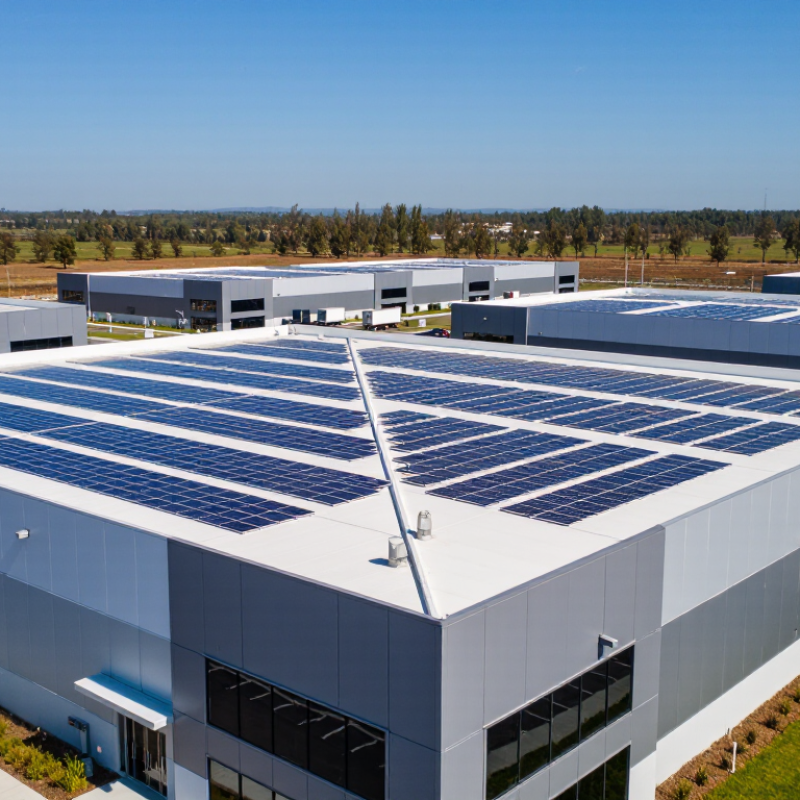
Solar energy panels convert sunlight into direct-current electricity through semiconductor cells. An inverter then changes it into alternating current for office equipment, lighting, and machinery. On a commercial roof, the process is quiet: sunlight hits the glass surface, electricity flows through cables, and the inverter manages usable power.
The scale is already substantial. IRENA’s Renewable Capacity Statistics 2024 reported 1,419 gigawatts of global solar photovoltaic capacity by the end of 2023. Solar additions reached about 345 gigawatts that year. The IEA’s Renewables 2024 report also identifies solar PV as the fastest-growing renewable technology through 2030. These figures show momentum, not guaranteed savings.
Performance depends on roof direction, shading, temperature, panel layout, and local electricity prices. A shaded vent can reduce output across several connected panels. Battery storage may shift daytime generation into evening demand, but it adds cost and maintenance. Not magic.
Businesses should request hourly load data, structural checks, and a realistic production estimate. I have seen simple annual forecasts hide difficult winter gaps. That weakness deserves attention. A professional assessment should include inverter losses, cleaning access, degradation, grid connection limits, and repair plans. Data from IRENA and the IEA supports the technology’s growth, while site-specific engineering determines whether a particular roof performs well.
Businesses are turning to solar power because energy costs can disrupt otherwise careful financial planning. Solar panels convert unused rooftop space into a working energy asset. A warehouse roof, for example, may generate electricity during the busiest production hours. That timing can reduce reliance on expensive daytime grid power.
The decision requires more than checking annual sunlight. A professional assessment should examine roof condition, shading, structural capacity, and local electricity rules. Meter data also matters. Comparing monthly demand with expected solar production creates a more realistic estimate. Battery storage may support evening operations, but it can increase project costs and maintenance needs. The calculation is not always neat.
Solar can also strengthen operational resilience and demonstrate responsible resource management. Employees and customers may notice panels above an office, factory, or retail site. Still, solar is not effortless. Poor installation planning can cause drainage issues, access problems, or disappointing output. A business should request documented performance assumptions, safety procedures, warranties, and maintenance expectations before signing an agreement. Independent engineering advice may be worthwhile for larger systems. The cheapest proposal is not always the most reliable one. That lesson is easy to overlook. Conditions change.
Commercial solar panels can turn a large electricity bill into a planned business investment. Instead of buying all power from the grid, a company generates electricity on its own roof or property. That difference can reduce monthly operating costs and improve budget stability.
An energy audit should examine twelve months of utility bills, peak demand charges, roof condition, and available sunlight. Real numbers matter. Many businesses may qualify for tax incentives, accelerated depreciation, or local energy programs, depending on their location. These benefits can shorten the payback period, but eligibility rules require professional review. Financing can also preserve cash for inventory, payroll, or equipment. A purchased system may build an asset, while a lease may offer simpler payments with less initial expense.
Solar can also protect a business from future electricity price increases. Demand charges deserve attention because a short afternoon peak can raise an entire monthly bill. Battery storage may reduce that peak, although it adds maintenance and replacement costs. The numbers are not always tidy. Cloudy seasons can weaken production, and optimistic estimates can distort expected savings. Roof repairs, shading, insurance, and maintenance must enter the financial model before approval.
| Financial Metric | Small Commercial System | Medium Commercial System | Large Commercial System |
|---|---|---|---|
| Typical System Size | 50 kW | 250 kW | 1 MW |
| Estimated Annual Electricity Generation | 65,000 kWh | 325,000 kWh | 1,300,000 kWh |
| Estimated Installed Cost Before Incentives | $90,000 | $375,000 | $1,300,000 |
| Illustrative Federal Tax Credit | Up to $27,000 | Up to $112,500 | Up to $390,000 |
| Estimated Net Cost After 30% Credit | $63,000 | $262,500 | $910,000 |
| Assumed Commercial Electricity Rate | $0.15/kWh | $0.15/kWh | $0.15/kWh |
| Estimated First-Year Electricity Savings | $9,750 | $48,750 | $195,000 |
| Estimated Annual Operations and Maintenance Cost | $900 | $3,750 | $13,000 |
| Estimated First-Year Net Savings | $8,850 | $45,000 | $182,000 |
| Estimated Simple Payback Period | 7.1 years | 5.8 years | 5.0 years |
| Estimated 25-Year Gross Electricity Savings | $304,000 | $1,520,000 | $6,080,000 |
| Estimated 25-Year Net Benefit | $199,000 | $1,066,000 | $4,445,000 |
| Estimated Return on Investment Over 25 Years | 316% | 406% | 489% |
Assumptions: Illustrative U.S. commercial benchmarks based on a solar production estimate of approximately 1,300 kWh per installed kW per year, an electricity rate of $0.15/kWh, a 0.5% annual system degradation rate, and a 30% federal tax credit assumption. Actual results vary by location, roof design, system orientation, utility rates, financing structure, tax eligibility, incentives, and applicable regulations.
Why Choose Solar Energy Panels for Your Business?
Solar energy panels can reduce a business’s dependence on grid electricity and fossil-fuel generation. They convert unused roof space into a working energy asset. A warehouse roof, for example, may produce power during the busiest daylight hours. This can support lighting, cooling systems, computers, and production equipment. Lower electricity demand can also make monthly operating costs more predictable. However, solar is not automatically green. Manufacturing, transport, installation, and eventual disposal create environmental impacts. A responsible decision should consider the system’s full life cycle.
Operational benefits depend on accurate planning. A professional site assessment should review roof strength, shading, local weather, electrical loads, and maintenance access. Panels usually need limited servicing, but dust, leaves, and storm damage can reduce output. Monitoring software can reveal unusual performance before it affects daily operations. Energy storage may improve resilience during outages, though batteries add cost, space requirements, and environmental considerations. I once assumed more panels always meant better results. Actual load patterns proved more important. That assumption needed correction.
Tips: Compare at least twelve months of electricity bills before sizing a system. Check production estimates against winter sunlight, not only summer figures. Keep clear inspection paths around equipment. Ask for written performance assumptions and maintenance responsibilities. Review recycling options before installation. Small details matter. A measured design can protect cash flow while reducing emissions and improving operational control.
For a business, installing solar panels begins with checking the building, not choosing equipment. A professional site assessment should measure roof age, structural strength, panel direction, and nearby shade. A large roof may still perform poorly if taller buildings block winter sunlight. Roof repairs should happen before installation. Removing panels later can increase costs.
Your electricity pattern matters just as much as your roof. Review at least twelve months of utility bills, including seasonal demand charges. Compare daytime consumption with expected solar production. If the business operates at night, battery storage may deserve consideration. However, batteries add cost, space requirements, maintenance, and safety planning. They are not automatically the best solution.
Ask for a written estimate with production assumptions, equipment life, maintenance duties, and expected performance decline. Check whether the installer uses qualified electrical professionals and follows local permits and grid-connection rules. Independent structural and electrical reviews can prevent expensive surprises. Financing also needs careful attention. A low monthly payment may hide fees, escalation clauses, or a long contract. The payback estimate may look convincing, but weather, electricity prices, and future roof work can change it. I would treat optimistic projections carefully and request conservative figures before approving anything.
Factors to consider before installing solar panels include local sunlight, available roof space, system size, and expected electricity production. The chart below shows estimated annual generation for a 100 kW commercial solar system under different solar-resource conditions.
Planning assumption: Annual generation is calculated as system size × 8,760 hours × capacity factor. Capacity factors of 12%–21% represent realistic low-to-high solar-resource scenarios; actual results depend on location, orientation, shading, weather, equipment, and maintenance.