Skip to content

Top 10 Roof Solar Panel Suppliers for Global Buyers

Roof solar has moved from a niche building upgrade to a significant part of the global energy market. IRENA’s Renewable Capacity Statistics 2024 reports that worldwide solar photovoltaic capacity reached about 1,419 gigawatts by the end of 2023. That scale matters to buyers. Supplier choice can affect project timelines, product consistency, and long-term service—not just the quoted panel price.

But supplier comparisons are rarely straightforward. A rooftop system must fit its climate, roof structure, electrical design, and maintenance plan. Panels that perform well in a dry, sunny region may face different demands in humid or snowy conditions. Small details count: module dimensions, connector compatibility, warranty terms, and access to replacement parts. Ask for documented test results and clear warranty conditions. Marketing claims alone are not enough.

There is no universal winner. IRENA’s figures describe the market, not the reliability of any individual manufacturer. Buyers should also distinguish a module supplier from an installer or full-system provider. This guide examines ten suppliers through practical considerations, including product range, international reach, certifications, and support availability. It is a starting point, not a substitute for project-specific technical review. That distinction is easy to overlook. A supplier with a broad portfolio may still be a poor fit for a particular roof. Comparing verified documentation alongside local service options gives global buyers a more grounded shortlist.
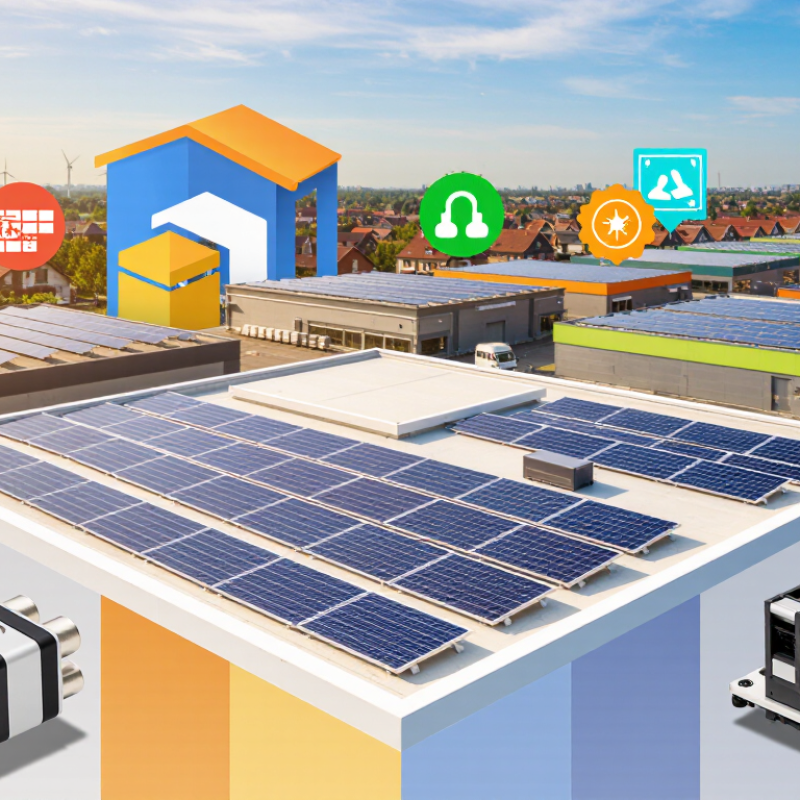
Top 10 Roof Solar Panel Suppliers for Global Buyers

Roof Solar Panels: Types, Applications, and Global Market Context

Roof solar panels turn unused roof space into on-site electricity for homes, warehouses, farms, and commercial buildings. Monocrystalline modules are widely used where roof area is limited. Polycrystalline options remain available, while thin-film products can suit some lightweight or curved surfaces. Each type differs in efficiency, weight, appearance, and cost. There is no universal best choice. Roof age, shading, orientation, and load capacity matter just as much.

Global buyers should consider how local weather and electricity use affect system design. Hot climates can reduce panel output, while snow and strong winds require careful structural planning. Grid-connected systems are common in cities; battery storage can help sites needing backup power. Compare suppliers’ product specifications, warranty terms, test documentation, and after-sales support. Check that installation plans account for roof penetrations and drainage. Small details can cause trouble later.

Tips: Ask for a roof assessment before requesting final pricing. Compare quoted system output using the same assumptions. Confirm who handles delivery, installation, and service. Measure twice. A low price can look attractive, but unclear warranty coverage deserves a second look.

Criteria for Evaluating Roof Solar Panel Suppliers

A reliable roof solar panel supplier should provide more than an attractive quotation. Check documented power output, temperature performance, and degradation rates, then compare those figures under the same test conditions. Ask for independent test reports and confirm that product certifications match the destination market’s requirements. Requirements vary, so a certificate alone does not prove a panel suits every project.

Roof conditions matter. Request clear installation guidance for wind loads, snow loads, mounting systems, and roof types. Review warranty terms carefully, including who handles claims and how replacement panels are supplied. For cross-border orders, assess production capacity, packaging, shipping records, and access to technical support. Ask for references from projects with similar climates and roof designs. Details matter. A polished specification sheet can still leave unanswered questions.

Tips: Request a sample document set before ordering: test reports, warranty terms, and packing details. Check whether quoted lead times include shipping. Compare service commitments, not just price. No checklist removes every risk, and supplier claims deserve verification. Sometimes the evidence is incomplete; note that gap before making a decision.

Top 10 Roof Solar Panel Suppliers for Global Buyers

Choosing among the top 10 roof solar panel suppliers for global buyers takes more than comparing panel prices. A supplier should provide clear electrical specifications, product test documents, and installation guidance that matches the roof type. Ask how panels perform in heat, heavy rain, or salty coastal air. Conditions matter.

For a real project, check whether a supplier can support consistent production and provide replacement parts over time. Request sample packaging details, too: cracked corners after a long sea shipment can delay installation. Confirm that product dimensions, connector types, and warranty terms are stated in writing. A dependable contact for technical questions is useful when drawings do not match the site.

Buyers should compare delivered costs, not just factory prices. Freight, protective packing, customs paperwork, and local service can change the budget. Check references from projects with similar climates and roof structures, then verify claims through independent documents where possible. One detail is easy to miss: a high-efficiency panel may not fit a roof with narrow sections or frequent obstructions. I would still double-check every specification; procurement tables can look precise while hiding small differences.

Top 10 Roof Solar Panel Suppliers for Global Buyers

An anonymized market overview of representative supplier profiles—not a verified company ranking. Output ranges and technology descriptions are indicative examples of products available in the global market; actual specifications, certifications, and availability vary by model and region.

Profile Typical module output Common technology Roofing application Global buyer considerations
01 — Residential-focused manufacturer Approximately 400–500 W per module Monocrystalline PERC or TOPCon; monofacial and bifacial options Standard pitched-roof systems for homes and small buildings Compare module dimensions, product warranty, local certification, and installer availability in the destination market.
02 — High-efficiency module specialist Often approximately 400–500 W, depending on module size TOPCon, heterojunction (HJT), or back-contact cell designs Space-constrained roofs where higher output per unit area may be useful Check temperature coefficients, low-light performance data, and the specific model’s independently certified datasheet.
03 — Large-format module producer Commonly around 500–700 W for larger modules Large-area monocrystalline cells; often TOPCon or PERC Commercial and industrial roofs with suitable structure and handling access Confirm module size, weight, roof loading, wind-load design, and compatibility with mounting equipment before selection.
04 — Lightweight-module supplier Varies by format; compare power per square metre and total module weight Lightweight glass or polymer-backed constructions, depending on the product Roofs with limited load capacity or installation constraints Review fire classification, mechanical-load test results, attachment method, and local building-code acceptance.
05 — Glass-glass module producer Commonly within the residential and commercial module ranges Glass-glass construction, offered in several cell technologies Projects prioritizing durable module construction; some models are bifacial Check weight, mounting requirements, product-specific warranty terms, and whether bifacial gain is relevant to the roof design.
06 — Building-integrated solar supplier Product-specific; compare rated power with conventional modules Solar roofing tiles, laminates, or other building-integrated PV formats New construction or roof replacement where PV is integrated with the building envelope Assess roofing-system compatibility, waterproofing details, replacement procedures, and qualified local installation support.
07 — Regional-market specialist Typically selected from standard residential or commercial formats Technology varies by model and local product range Projects requiring products adapted to a specific climate or market Verify import eligibility, local electrical approvals, climate-specific test data, and the availability of after-sales service.
08 — Commercial-rooftop supplier Often approximately 450–600 W, depending on format Monocrystalline PERC or TOPCon; bifacial options may be offered Warehouses, factories, and other large roof areas Compare system-level design support, delivery capacity, module dimensions, and compatibility with the project’s inverter and racking choices.
09 — Premium-warranty supplier Varies by product family and module size May include TOPCon, HJT, or other high-efficiency options Residential or commercial projects where long-term documentation is a priority Read the actual product and performance warranty documents, including exclusions, claim process, and the responsible legal entity.
10 — Broad-portfolio supplier Multiple ranges, from residential formats to larger commercial modules Several cell technologies and module constructions may be available Buyers sourcing different module types across multiple projects Confirm that the quoted model—not just the supplier’s general portfolio—has the required approvals, specifications, and delivery lead time.

Comparing Suppliers by Products, Certifications, and Market Reach

For global buyers, a roof solar supplier should be judged on products, evidence, and service—not price alone. IRENA’s Renewable Capacity Statistics 2025 puts global solar capacity at about 1,865 GW in 2024. It reports roughly 452 GW of additions that year. The scale makes reliable batch traceability and replacement support practical buying criteria.

A top-ten comparison should examine module dimensions, power output, and suitability for varied roof loads. Ask for current IEC 61215 and IEC 61730 documentation for the exact module model. Similar-looking paperwork is not enough. Check factory quality controls, too, but remember that a certificate cannot guarantee careful handling during shipment. Details matter.

Market reach is more than a map of export destinations. Confirm regional stock, realistic lead times, clear warranty procedures, and access to technical support in the buyer’s time zone. The IEA’s Renewables 2024 forecasts nearly 5,500 GW of renewable capacity growth by 2030, with solar providing almost 80% of that increase. This points to a crowded, fast-moving supply chain. A polished catalogue may still hide slow service; that deserves scrutiny. A supplier’s claims should be checked against project references and model-specific records.

Factors to Consider When Sourcing Solar Panels Internationally

Top 10 Roof Solar Panel Suppliers for Global Buyers

Factors to Consider When Sourcing Solar Panels Internationally

International sourcing involves more than comparing quoted prices. Check panel dimensions, rated output, temperature performance, and compatibility with the roof’s mounting system. A panel that performs well in a mild climate may lose efficiency under high heat. Ask for current test reports, product specifications, and clear warranty terms. Documentation should match the exact model and production batch.

Consider local weather and delivery conditions. Salt air, heavy snow, strong winds, and repeated temperature changes can affect panel and mounting-system performance. Confirm which market-specific standards and documents apply before ordering. Also clarify freight, insurance, import duties, packaging, and the process for reporting transit damage. A polished quotation can still leave important gaps; I would review the details line by line.

Tips: Request a sample datasheet and inspect the packaging plan. Check production capacity against your project schedule, and ask how batch numbers are tracked. Compare the full delivered cost, not just the panel price. Keep written records of specifications and approvals. Small details matter.