Choosing the right solar pole mount requires more than comparing product prices or polished catalog images. It demands practical judgment.
This guide examines ten leading solar pole mount manufacturers worldwide, focusing on engineering quality, material durability, installation support, and global supply reliability. Each company is assessed through details that matter on site. These include steel or aluminum selection, corrosion protection, wind and snow-load ratings, tilt adjustment, grounding provisions, and compatibility with different panel sizes. Warranty terms and replacement support also deserve close attention. A mount can appear affordable, yet costly freight or difficult installation may change its real value.
The wider energy market supports this interest. IEA Executive Director Fatih Birol has described solar PV as “the cheapest source of electricity in history.” That advantage still depends on dependable structural hardware. A poorly designed pole mount can create alignment problems, maintenance delays, or unnecessary stress on the array. Small details matter.
No ranking is perfectly universal. Climate, soil conditions, labor costs, and local certification requirements vary widely. Some manufacturers publish detailed load data; others offer less transparency. That difference should influence buyer confidence. Price alone is not enough.
This overview is designed for installers, distributors, engineers, and informed property owners. It highlights established capabilities while recognizing possible weaknesses. Market positions can change. Manufacturing quality can vary between product lines. Careful verification remains essential before any purchase.
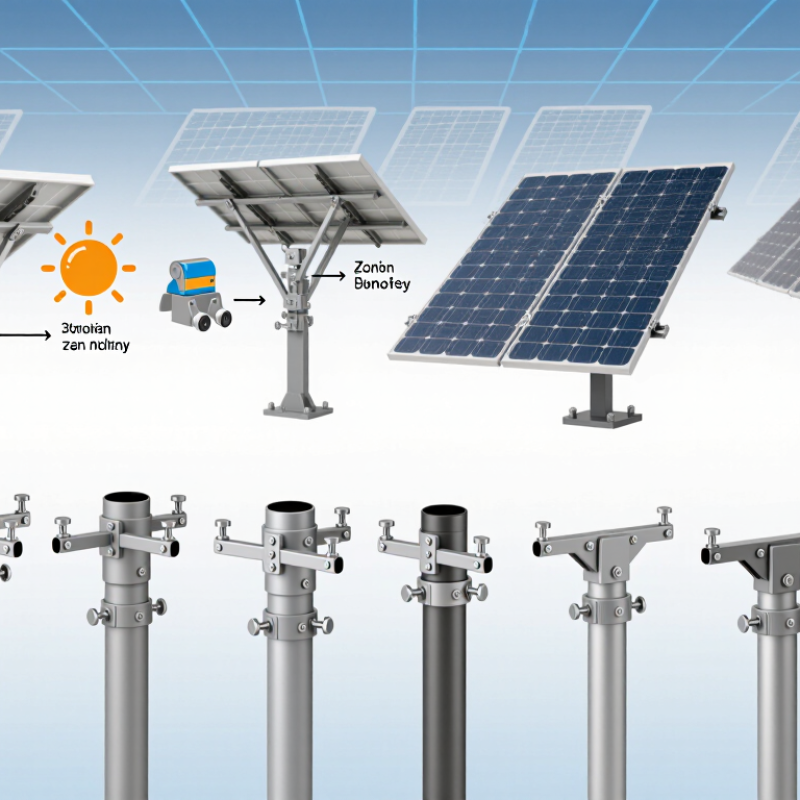
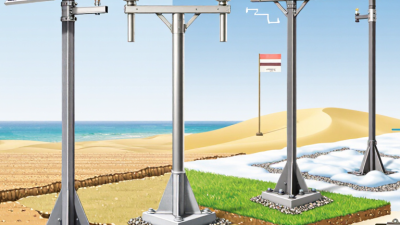
Solar pole mount systems elevate photovoltaic modules above ground on a steel or aluminum structure. A central pole transfers module loads into a concrete foundation or driven pile. This design suits limited land, uneven terrain, farms, parking areas, and remote power sites.
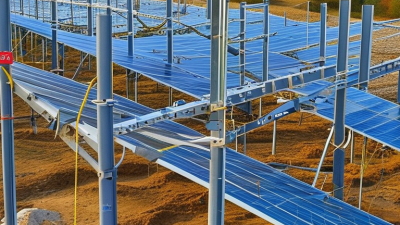
The main structure includes a pole, crossarms, rails, clamps, fasteners, and foundation hardware. Fixed-tilt systems hold panels at one angle. Adjustable designs change seasonally, improving exposure across different sun positions. Tracking versions rotate modules during the day, but they add motors, controls, maintenance, and wind-loading concerns.
According to IEA PVPS Trends 2024, global photovoltaic capacity exceeded 1.4 terawatts after more than 400 gigawatts of additions in 2023. This expansion increases demand for durable mounting systems, not only efficient modules. IRENA’s Renewable Capacity Statistics 2024 also reported solar as the largest source of new renewable capacity added globally in 2023.
Site engineering remains decisive. Soil tests should confirm pullout resistance, drainage, and corrosion risks before installation. In coastal areas, protective coatings and stainless hardware can extend service life. Snow and wind calculations must follow local structural requirements. Small errors matter.
A pole mount can simplify vegetation control and improve rear ventilation. However, taller structures may face stronger wind forces and higher foundation costs. Manufacturers should disclose load ratings, material standards, testing methods, and installation tolerances. In practice, no design fits every site. A lower-cost system may become expensive after difficult excavation, poor access, or neglected inspection.
Top 10 Solar Pole Mount Manufacturers Worldwide
Key Criteria for Evaluating Global Pole Mount Manufacturers
Global pole mount selection now demands more than a low quoted price. The IEA’s Renewables 2024 report expects renewable capacity to expand by nearly 5,500 GW by 2030, led by solar PV. That growth raises a practical question: can a manufacturer deliver repeatable quality across different soils, winds, and climates? Experience matters.
IRENA’s Renewable Capacity Statistics 2024 recorded 345.5 GW of new solar capacity in 2023. This scale makes structural reliability essential. Buyers should examine engineering calculations, wind-load testing, corrosion resistance, and compatibility with local soil conditions. Adjustable foundations can reduce installation problems on uneven ground. However, flexibility is not a substitute for verified strength.
Independent testing should align with recognized structural and electrical standards, including applicable provisions of UL 2703 and local building codes. Manufacturers should provide traceable material certificates, installation manuals, warranty terms, and field performance records. Supply-chain resilience also deserves attention. Can replacement parts arrive within weeks, not months? A low price may look attractive until missing fasteners delay an entire site. No scorecard is perfect. Even experienced buyers should question optimistic energy-yield claims and inspect projects operating through heavy rain, dust, and seasonal wind.
Top 10 Solar Pole Mount Manufacturers Worldwide
The leading solar pole mount manufacturers are distributed across several strong production regions. East Asia remains a major manufacturing center, supported by large steel networks, automated fabrication, and competitive export logistics. North American producers often focus on heavy-duty structures for high wind, snow, and utility-scale projects. Their designs usually emphasize field installation speed and certified load testing.
European manufacturers commonly specialize in corrosion resistance, modular engineering, and strict quality documentation. India is gaining strength through expanding solar demand, local steel processing, and cost-conscious engineering. Southeast Asian factories are also growing, although supply consistency can vary between suppliers. Latin American production is more regional, helping reduce freight costs and adapt systems to local terrain. Manufacturing capacity in the Middle East and Africa is developing more slowly, but local assembly is becoming practical for desert projects. The ranking is not absolute. Market data changes quickly, and factory capability may differ between product lines.
Tips: Compare tested load ratings, coating thickness, bolt quality, and installation manuals. Check whether the structure suits rocky soil, soft ground, or concrete foundations. Request recent inspection records. A low price can hide longer installation time. Regional sourcing may reduce shipping delays, but not always. That detail deserves careful checking.
Anonymized comparative view of major solar pole-mount manufacturing profiles by regional capability and market reach
| Rank | Manufacturer Code | Primary Manufacturing Region | Secondary Production or Supply Base | Main Product Strength | Key Geographic Markets | Production Scale | Regional Competitive Advantage |
|---|---|---|---|---|---|---|---|
| 1 | Manufacturer A | East Asia | South Asia and Southeast Asia | Galvanized steel and aluminum pole-mount systems for utility and commercial projects | Asia-Pacific, Europe, Middle East, Africa, North America | Very large | Extensive metal-processing capacity, competitive component costs, and broad export logistics |
| 2 | Manufacturer B | North America | Mexico and selected domestic fabrication sites | Fixed-tilt and adjustable pole structures designed for residential, agricultural, and commercial installations | United States, Canada, Latin America | Large | Strong compliance with North American structural, wind, snow, and electrical requirements |
| 3 | Manufacturer C | Western Europe | Central Europe and contract fabrication in the Mediterranean region | Corrosion-resistant steel systems for distributed generation and high-wind environments | European Union, United Kingdom, North Africa, Middle East | Large | Advanced engineering, strong certification capabilities, and proximity to mature European solar markets |
| 4 | Manufacturer D | South Asia | Domestic steel centers and regional assembly partners | Cost-efficient single-pole and multi-pole structures for ground-mounted and off-grid solar | India, South Asia, Southeast Asia, Africa, Middle East | Large | Access to local steel supply, growing domestic demand, and adaptable project customization |
| 5 | Manufacturer E | Southern Europe | Eastern Europe and North African supply partners | Pre-engineered fixed-tilt pole mounts for utility-scale and agricultural applications | Europe, Latin America, North Africa, Middle East | Medium to large | Strong solar engineering heritage and efficient access to Mediterranean and Latin American markets |
| 6 | Manufacturer F | Australia and Oceania | Southeast Asian component suppliers | Heavy-duty systems engineered for remote, coastal, high-temperature, and cyclone-prone locations | Australia, New Zealand, Pacific Islands, Southeast Asia | Medium | Specialized designs for harsh climates, remote logistics, and demanding outdoor conditions |
| 7 | Manufacturer G | Northwestern Europe | Central Europe and local steel-processing networks | Modular pole-mount kits with flexible tilt adjustment and simplified installation | Europe, United Kingdom, North America | Medium to large | High product standardization, installation efficiency, and strong distribution infrastructure |
| 8 | Manufacturer H | East Asia | Domestic regional factories and Southeast Asian export hubs | Aluminum-intensive and hybrid steel-aluminum systems for residential and light-commercial use | Asia-Pacific, Europe, North America, Latin America | Large | Strong component integration, rapid product iteration, and broad OEM supply capability |
| 9 | Manufacturer I | Latin America | Domestic fabrication and imported specialized components | Robust fixed-tilt pole mounts adapted to uneven terrain and decentralized solar projects | Brazil, Mexico, Chile, Argentina, Central America | Medium | Local project knowledge, reduced inland transport distances, and regional customization |
| 10 | Manufacturer J | Middle East | Gulf-region fabrication and Asian component sources | Dust-resistant, high-temperature, and corrosion-protected pole structures for arid environments | Middle East, North Africa, Central Asia, East Africa | Medium | Expertise in desert conditions, regional procurement, and large-scale infrastructure deployment |
The leading solar pole mount manufacturers differ in design priorities and field experience. One specializes in galvanized steel systems for open farmland. Another develops compact aluminum mounts for narrow residential lots. A third focuses on high-wind engineering, using reinforced brackets and deeper foundation guidance. Its testing records are useful, but local soil still changes the final result.
A fourth manufacturer offers adjustable tilt hardware for seasonal production changes. A fifth builds systems for uneven ground, reducing costly grading work. Another supplies heavy-duty mounts for larger photovoltaic modules and thicker frames.
One manufacturer stands out for corrosion-resistant coatings near coastal regions. A separate supplier emphasizes modular parts, making repairs faster on remote sites. Its instructions are clear, though some assembly steps need better illustrations. Another company integrates cable management into the pole structure, protecting wires from rodents and standing water.
The tenth profile represents a manufacturer with strong project documentation and installer training. Its engineering files usually include wind assumptions, pull-out limits, and recommended torque values. These details support safer planning and more reliable procurement. However, published performance data should not replace a site-specific structural review. No manufacturer is flawless. A promising design can still fail when installers ignore frost depth, drainage, or shading from nearby trees. Buyers should compare material thickness, coating quality, warranty terms, replacement access, and regional certifications. Hands-on installation feedback often reveals weaknesses that brochures leave out.
Solar pole mounts are gaining attention as global photovoltaic capacity expands. IRENA reported 346 GW of new solar capacity in 2023, representing most renewable additions that year. For buyers comparing the top 10 solar pole mount manufacturers worldwide, product quality matters beyond price. Look for adjustable tilt angles, preassembled components, corrosion-resistant coatings, and clear structural calculations. Hot-dip galvanized steel can improve durability, especially in humid or coastal locations. Aluminum may reduce weight, but it can require closer engineering review.
Standards provide a practical quality filter. IEC 62548 addresses photovoltaic array design and installation principles, while IEC 61730 covers module safety. Mounting structures should also follow local wind, snow, seismic, and foundation requirements. ASCE 7 may guide projects in the United States, while Eurocodes often apply in Europe. IRENA’s Renewable Capacity Statistics 2024 shows rapid deployment, but fast growth does not remove site risks. A strong product can still fail when soil conditions, wind exposure, or drainage are underestimated. That part is often overlooked.
Tips: Request stamped structural calculations, coating thickness records, material certificates, and installation tolerances. Compare the pole diameter, embedment depth, foundation method, and maintenance access. Ask for project references in similar climates. Do not select only by module count. A cheaper design may need deeper foundations or more frequent inspections. Salt spray testing is useful, though it cannot perfectly predict every real site.