Skip to content

Top 10 Solar Panel Home Installation Tips for Buyers

Choosing solar power for a home involves more than comparing panel prices. A successful solar panel home installation begins with the roof, local sunlight, and household electricity habits. A south-facing roof may perform well, but shading from trees, chimneys, or nearby buildings can reduce daily production. Even a small shadow can matter during peak hours. Buyers should inspect roof age, structural condition, and available space before requesting detailed quotes. No roof is perfect.

Reliable planning requires evidence, not confident promises. Ask installers for recent project examples, product certifications, workmanship coverage, and clear production estimates. Compare expected annual output with past utility bills, not with an idealized brochure. Energy use changes over time. New appliances, electric vehicles, or home additions can alter the system size. Battery storage may improve evening use, but it also adds cost, maintenance considerations, and installation space.

Several practical details deserve attention. Confirm who handles local applications and inspections. Review equipment warranties separately from labor warranties. Check inverter placement, cable routing, monitoring access, and emergency shutdown features. A qualified professional should explain these choices in plain language. Independent advice can reveal overlooked weaknesses.

Small details matter.

The following ten tips help buyers evaluate proposals carefully, avoid rushed decisions, and prepare for realistic performance. Some recommendations may need adjustment for climate, roof design, budget, and local requirements. That uncertainty is normal. Good solar decisions come from measured information, documented questions, and a willingness to reconsider attractive offers.
Top 10 Solar Panel Home Installation Tips for Buyers

Assess Your Home’s Solar Potential and Energy Needs

Before choosing a solar system, measure how much sunlight your roof actually receives. Roof direction, pitch, nearby trees, chimneys, and seasonal shadows all affect production. A roof can look sunny at noon yet lose output during winter afternoons. The National Renewable Energy Laboratory’s PVWatts tool estimates production using local weather, roof angle, system size, and losses. Use several roof sections, not one optimistic guess. Shade changes everything.

Review twelve months of utility bills, including summer cooling and winter heating. The U.S. Energy Information Administration reported that the average American household used about 10,791 kilowatt-hours of electricity in 2022. Your home may differ sharply because of insulation, electric vehicles, heat pumps, or family routines. Compare monthly kilowatt-hours, not only the bill amount. My first estimate was too optimistic because I ignored evening appliance use.

Tip: List major loads by time of day. Note when the oven, water heater, and air conditioner operate. Ask an installer to model hourly demand, roof shading, local weather, and expected system losses. The International Energy Agency reports that solar PV remains among the lowest-cost new electricity sources in many markets, but affordability still depends on site conditions. Leave room for future demand. A larger family or electric vehicle can change the calculation quickly. Review the design carefully.

Top 10 Solar Panel Home Installation Tips for Buyers

Assess Your Home’s Solar Potential and Energy Needs

Roof orientation and shading strongly affect solar production. A south-facing roof typically provides the best output in the Northern Hemisphere, while east- and west-facing roofs can still perform well. These planning values are general benchmarks; actual results depend on location, roof pitch, shading, weather, system size, and household electricity use.

Before purchasing, review at least 12 months of utility bills and compare your annual electricity demand with the roof areas that receive the most unobstructed sunlight.

Compare Panel Types, System Sizes, and Installation Options

Choosing solar panels starts with the roof, not the sales brochure. Monocrystalline panels usually deliver strong efficiency in limited space, while thin-film panels can suit large, lightweight surfaces. NREL’s 2023 Solar Photovoltaic System Cost Benchmark models an 8-kilowatt residential system, but your home may need far less or more. Review twelve months of electricity bills, roof shading, and future loads, such as an electric vehicle.

System size deserves careful testing. Oversizing can increase upfront cost and leave unused production, while undersizing may increase grid purchases. The IEA PVPS Trends 2024 report recorded more than 1.6 terawatts of global solar capacity by the end of 2023. That growth improves market experience, but it does not guarantee identical results at every address. A professional installer should model roof orientation, local weather, export rules, and seasonal demand.

Tip: Request two or three designs. Compare annual kilowatt-hours, usable roof area, equipment warranties, labor scope, and maintenance access. Ask whether the quote includes permitting, structural review, monitoring, and interconnection.

Battery storage is another installation option, not an automatic requirement. It may help during outages or high evening rates, but its value depends on tariffs and cycling patterns. A grid-tied system can cost less, yet it normally will not power the home during an outage without properly configured backup equipment. I would not trust a forecast using one perfect weather year. Ask for conservative production estimates and the assumptions behind them.

Top 10 Solar Panel Home Installation Tips for Buyers - Compare Panel Types, System Sizes, and Installation Options

No. Buying Decision Common Options Typical Homeowner Consideration Advantages Potential Limitations Practical Buyer Tip
1 Choose a Panel Type Monocrystalline, polycrystalline, or thin-film Monocrystalline panels commonly provide higher efficiency per square metre, while thin-film can be useful for selected low-load or lightweight applications. More suitable panel choices can improve the use of limited roof space. Higher efficiency may come with a higher purchase price; performance varies by product and conditions. Compare efficiency, usable roof area, temperature performance, warranty terms, and installed cost rather than price per panel alone.
2 Estimate System Size Small: 3–5 kW; medium: 6–8 kW; large: 9–12 kW A suitable size depends on annual electricity use, available roof area, local sunlight, utility rules, and future energy needs. A correctly sized system can reduce grid electricity purchases without unnecessary equipment cost. Oversizing may increase upfront cost, while undersizing may leave substantial electricity demand uncovered. Use at least 12 months of electricity bills and ask for a production estimate based on the roof’s actual orientation and shading.
3 Check Roof Condition New roof, sound existing roof, or roof requiring repair Solar equipment can remain installed for decades, so the roof should have sufficient remaining service life. Addressing roof work before installation can avoid later panel removal and reinstallation costs. Roof repairs after installation may be more disruptive and expensive. Have the roof inspected before signing and clarify who is responsible for removing and reinstalling panels if repairs become necessary.
4 Evaluate Roof Orientation South-facing, east/west-facing, or mixed-orientation roof planes In the Northern Hemisphere, south-facing surfaces often receive strong annual solar exposure; east- and west-facing surfaces can support morning or afternoon production. Using multiple roof planes may improve the use of available space. Production can be lower when panels face away from the strongest solar resource or are affected by nearby obstructions. Request separate production estimates for each roof plane instead of relying on a single generic estimate.
5 Assess Shading Trees, chimneys, vents, neighbouring buildings, and seasonal shadows Even partial shading can reduce output from affected modules or strings, depending on system design. Accurate shade analysis helps identify the most productive panel locations. Tree growth and winter or summer sun angles can change the shading pattern over time. Ask for an on-site shade assessment and confirm whether the design includes module-level power electronics where appropriate.
6 Compare Inverter Designs String inverter, microinverters, or power optimizers with a central inverter String systems can be straightforward and cost-effective; module-level electronics can be useful for complex roofs or uneven shading. Choosing the right architecture may improve monitoring flexibility and performance on roofs with multiple orientations. More components on the roof can increase equipment count, service considerations, and replacement complexity. Compare total installed cost, monitoring features, expected replacement access, and warranty coverage for every component.
7 Decide on Battery Storage No battery, partial-home backup, or larger backup system Battery value depends on electricity rates, outage frequency, export compensation, critical loads, and desired backup duration. Storage can provide backup power for selected loads and shift solar energy to later hours. Batteries add cost, occupy space, have finite usable capacity, and may not power every household circuit. List essential loads such as refrigeration, lighting, internet equipment, and medical devices before comparing battery capacities.
8 Compare Installation Methods Roof-mounted, ground-mounted, carport, or other permitted structures Roof mounting is common, while ground or structure-mounted systems may help when the roof is shaded, small, or unsuitable. Alternative mounting can improve orientation, accessibility, or future maintenance in suitable locations. Ground and structure-mounted systems may require more materials, space, excavation, or permitting. Compare the complete installed price, including structural work, trenching, drainage, access, and local approval requirements.
9 Review Electrical Requirements Existing service panel, upgraded service panel, or load-management equipment The electrical service must be able to accept the proposed solar and storage equipment under applicable electrical rules. Early review can prevent redesigns and unexpected construction delays. An electrical upgrade may add cost and affect the project schedule. Request a documented assessment of the main service, breaker capacity, grounding, meter requirements, and interconnection process.
10 Check Costs, Warranties, and Permits Cash purchase, loan, lease, or power purchase arrangement Total value depends on installed price, financing charges, incentives, maintenance obligations, energy savings, and contract length. Comparing the complete offer makes it easier to identify long-term costs and responsibilities. Contract terms may differ for equipment ownership, roof work, monitoring, repairs, transfer, and removal. Obtain itemized quotes, confirm permits and inspections, review equipment and workmanship warranties, and compare ownership terms using the same system assumptions.
Planning figures are general residential comparison ranges. Actual system size, production, costs, permits, and savings depend on the home, location, utility rules, roof conditions, and selected equipment.

Check Roof Condition, Position, Shading, and Structural Capacity

Top 10 Solar Panel Home Installation Tips for Buyers

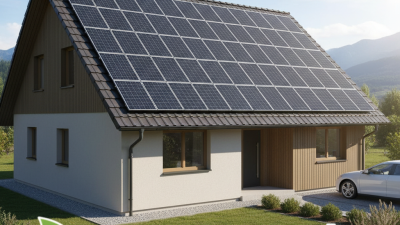
Before buying solar panels, inspect the roof carefully. Look for cracked shingles, soft decking, exposed fasteners, and water stains in the attic. A roof nearing replacement may need repairs before installation. In practical site assessments, small leaks often become expensive problems after panels are mounted. I once underestimated a minor roof sag; that was a useful warning. Do not rely only on photographs. Request a physical inspection and written findings from a qualified roofing professional.

Tip: Watch the roof throughout the day. Southern exposure can help, but actual sunlight matters more than compass direction. Chimneys, nearby trees, dormers, and taller buildings may cast moving shadows across the array. Ask the installer for a shade analysis covering different seasons. A clear winter roof may be shaded in summer. That detail is easy to miss.

Tip: Confirm structural capacity before signing a contract. The roof must support the panels, racking, wind forces, and possible snow loads. An installer should review framing, attachment points, roof age, and local building requirements. If the structure seems uncertain, obtain an evaluation from a licensed structural professional. Do not accept vague assurances. Request load calculations and permit information in writing. My own preference is to leave room for uncertainty, because older rafters can behave differently from drawings. A careful assessment may cost more today, but it can prevent movement, leaks, or unsafe loading later.

Review Installer Qualifications, Warranties, Permits, and Contracts

Top 10 Solar Panel Home Installation Tips for Buyers

A qualified installer should show current electrical licenses, insurance, training records, and recent project references. Ask who performs the roof work and electrical connection. These may be different crews. The Solar Energy Industries Association recommends checking licensing, written proposals, and complaint histories before signing. Berkeley Lab’s Tracking the Sun 2024 report found that U.S. residential systems commonly vary in size, design, and pricing, so copied estimates can mislead. Request an assessment based on your roof, shade, utility rate, and annual electricity use.

Read every warranty separately. Equipment warranties may cover panels for 20 to 30 years, while workmanship coverage can be much shorter. Confirm who handles labor, shipping, roof penetrations, and failed components. A long warranty means little if the responsible company disappears. Ask whether roof repairs void coverage. I once saw buyers focus on panel output while ignoring inverter replacement costs. That was a costly oversight.

Permits and inspections should appear in the contract, with responsibility clearly assigned. The U.S. Department of Energy notes that permitting and interconnection requirements vary by jurisdiction. Delays are possible. The contract should state system size, estimated production, payment stages, cancellation rights, change-order rules, completion dates, and remedies for underperformance. SEIA and Wood Mackenzie reported that U.S. residential solar installations exceeded 6 gigawatts in 2023, increasing the need for careful comparison. Do not rely on verbal promises. Keep every document. Review the fine print twice.

Calculate Costs, Incentives, Financing, and Long-Term Savings

Top 10 Solar Panel Home Installation Tips for Buyers

Start with twelve months of electricity bills. Measure seasonal demand, not just the highest monthly usage. Request at least three itemized quotes. Lawrence Berkeley National Laboratory’s Tracking the Sun 2024 report places typical residential prices near $3 per watt before incentives. A 7-kilowatt system could therefore cost roughly $21,000. Check the equipment, labor, permits, roof work, and monitoring separately. Do not accept vague estimates.

Calculate incentives carefully. The U.S. Department of Energy states that eligible homeowners may receive a 30% federal clean-energy tax credit under current rules. Local rebates and utility programs differ widely. Confirm eligibility before signing. Test financing with the full APR, loan term, dealer fees, and early-payment conditions. A low monthly payment can hide a costly loan. Cash flow matters.

Model savings with realistic assumptions. A 7-kilowatt system may produce about 9,000 kilowatt-hours annually, depending on sunlight and roof direction. At the U.S. Energy Information Administration’s 2024 residential average of roughly 16 cents per kilowatt-hour, gross annual savings could approach $1,440. Export credits may be lower. Include inverter replacement, insurance, cleaning, and battery costs. NREL commonly models around 0.5% annual panel degradation. Small details compound. I would not trust a glossy payback promise. A spreadsheet can still be wrong when utility rates, shading, or roof repairs change. Check warranties, installer licensing, production guarantees, and the roof’s remaining life before committing.