Skip to content

How to Choose Solar Panels for Home Use?

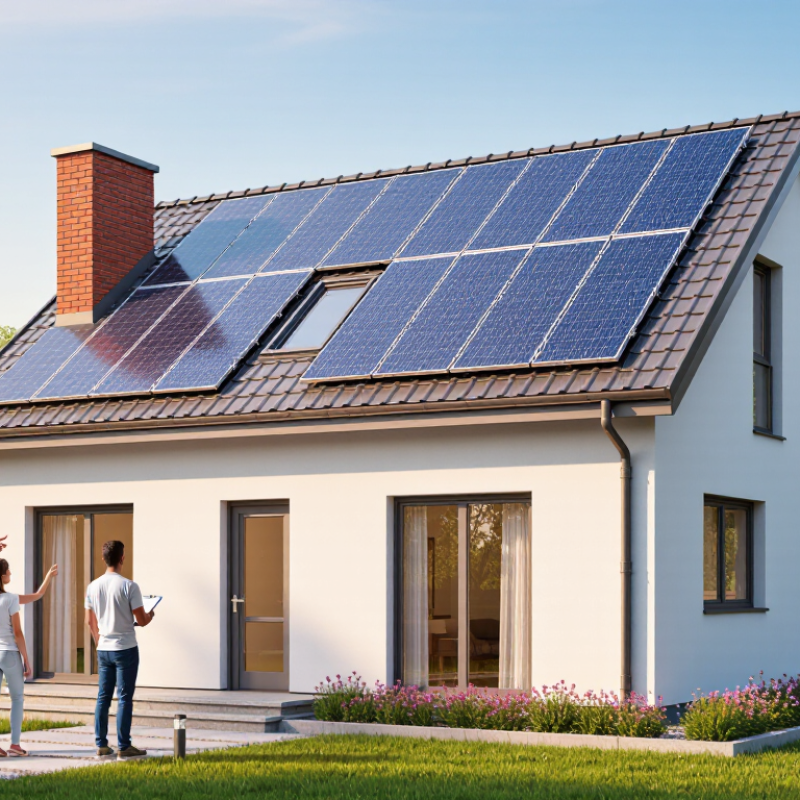
Choosing solar panels for home use begins with your roof, electricity habits, and budget—not a glossy efficiency claim. IEA Executive Director Dr. Fatih Birol has described solar as “the new king of electricity markets.” That wider shift is encouraging, but a home system still needs careful sizing. A south-facing roof may perform well, while a tall chimney can cast a sharp shadow across several panels. Even small details matter. Review your recent electricity bills and note when your household uses the most power. Then check roof age, usable area, direction, and shade throughout the day.

This guide explains how to compare panel efficiency, power ratings, warranties, and system costs without treating any single number as the whole answer. It also covers inverters, installation quotes, and whether battery storage fits your household’s needs. Ask installers to show estimated annual production and explain their assumptions, including local weather and roof conditions. Compare several written proposals. Look closely at equipment models, labor coverage, and projected savings; those figures are estimates, not promises. A cheaper panel may suit one roof, while a higher-efficiency model may help where space is tight. There is no perfect shortlist. I would still want to see the roof in person before making a confident recommendation. That uncertainty is useful: it reminds homeowners to verify details, ask questions, and choose a system that fits real daily use.
How to Choose Solar Panels for Home Use?

Assess Household Electricity Use and Solar Capacity Needs

Before choosing panels, learn how much electricity your household actually uses. Review twelve months of utility bills, not just the latest one. Seasonal changes matter: air conditioning can raise summer use, while electric heating may increase winter demand. Write down monthly kilowatt-hour totals and note any unusually high bills. Start with bills. Then consider upcoming changes, such as an electric vehicle, heat pump, or a new household member. A simple spreadsheet can reveal whether high use is steady or limited to certain months.

Next, compare that demand with the solar capacity your roof can reasonably support. A system’s annual production depends on local sunlight, roof direction, shading, and panel layout. Ask an installer for an estimate based on your address and roof conditions, then compare it with annual use. Do not size a system from roof area alone; a chimney shadow at noon can reduce output. Small details matter. If you use most electricity after sunset, ask how much generation you can use directly and whether storage changes the calculation. Estimate current needs, but leave room for uncertainty. Bills cannot predict every habit. Guests, remote work, or hotter summers may alter consumption, so review your assumptions before settling on a capacity target.

Compare Solar Panel Types, Efficiency, and Power Ratings

For a tight roof, compare efficiency before panel count. Monocrystalline panels usually deliver more power per square metre than polycrystalline panels, while thin-film products can suit lightweight or curved surfaces. The trade-off is real. Fraunhofer ISE’s 2024 Photovoltaics Report documents commercial crystalline-silicon module efficiencies around 22%, though actual products and conditions vary. Check the module datasheet, not just a sales estimate.

A panel’s watt rating is its output under standard test conditions, not a promise of daily production. A 400-watt panel will not steadily produce 400 watts through cloudy mornings, hot afternoons, or partial shade. NREL’s PVWatts model uses system capacity and local weather to estimate energy yield, making it more useful than comparing wattage alone. Compare quoted systems by annual kilowatt-hours, roof area, and expected shading. I still double-check shade. One chimney shadow can matter more than a small efficiency difference. Higher-efficiency panels may help when roof space is limited, but their premium does not always pay back; I’d want a site-specific estimate before deciding.

Check Roof Conditions, Orientation, and Available Sunlight

Before comparing panels, inspect the roof itself. Look for cracked shingles, soft spots, lifted flashing, or signs of leaks in the attic. Solar equipment can stay in place for decades, so a roof near replacement may need attention first. A qualified roofer or installer can assess structural capacity and local wind or snow loads. A visual check alone is not enough.

Orientation matters, but it is not a pass-or-fail test. South-facing roof planes often receive strong annual sunlight in the Northern Hemisphere. East- and west-facing roofs can still work well. Roof pitch, trees, chimneys, and nearby buildings all affect exposure. Shade moves. Check shadows in the morning, around noon, and in late afternoon, ideally during different seasons.

Use a solar map or site assessment to estimate annual sunlight, and ask how it accounts for cloudy days and partial shade. Small details matter. A branch shading one corner at 4 p.m. may affect output differently from a broad shadow at noon. Online tools simplify real roofs, and their estimates can be wrong. Ask for the proposed panel layout and shading assumptions in writing, then compare them with what you can observe from the ground.

Evaluate Panel Durability, Warranties, and Total System Cost

A panel’s warranty can look reassuring, but the exclusions matter. Compare product coverage for defects with performance coverage for electricity output. Check the stated output at year 25, plus labor, shipping, and claim requirements. NREL researchers Jordan and Kurtz reviewed field data and reported median module degradation near 0.5% per year. That is an average, not a promise for your roof. Shade from a chimney, summer heat, and poor ventilation can change real-world results.

Look beyond the panel price. Lawrence Berkeley National Laboratory’s Tracking the Sun report documents wide variation in residential system prices, so compare complete, like-for-like quotes. Include panels, inverter replacement, mounting, electrical work, permits, and financing charges. Ask whether roof repairs or a main-panel upgrade are excluded. A low monthly payment can hide a higher total bill. Small print matters.

Ask each installer for an itemized estimate and the assumptions behind its production forecast. Check that the warranty provider, labor coverage, and transfer terms are clearly named in writing. Look at the roof’s condition, too; removing panels for a later reroof can add cost. I would not choose solely by the longest warranty. It is easy to compare years and miss service limits. A spreadsheet helps, but it may still miss a tricky roof or future repair.

Match Panel Selection to Inverter, Installer, and Local Requirements

How to Choose Solar Panels for Home Use?

Match Panel Selection to Inverter, Installer, and Local Requirements

Panel choice starts with system compatibility, not the highest wattage on a product sheet. Check the inverter’s allowed voltage, current, and number of panel strings. A panel with strong output may still be a poor match if its electrical range conflicts with the inverter. Ask for the proposed string layout and a written calculation. Small details matter.

Roof conditions shape the choice, too. Shade from a chimney, nearby trees, or a dormer can affect production throughout the day. An installer should assess roof direction, usable area, wiring routes, and roof condition before recommending panels. Request expected annual production, not just peak output. Local permitting, utility interconnection, fire-access rules, and wind or snow loads may affect the layout. Requirements vary by location, so confirm them with the installer and relevant authority. Even a tidy plan can miss a constraint.