
What Are the Best Solar Options for Global Buyers in 2026?
In 2026, the best solar options depend on where power is needed, how it will be used, and what happens after installation. A homeowner with a shaded roof needs different equipment from a utility developer managing a sunlit, open site. IEA Executive Director Fatih Birol described solar as “the new king of electricity markets.” That phrase captures its growing importance, but it does not make every project a good fit.
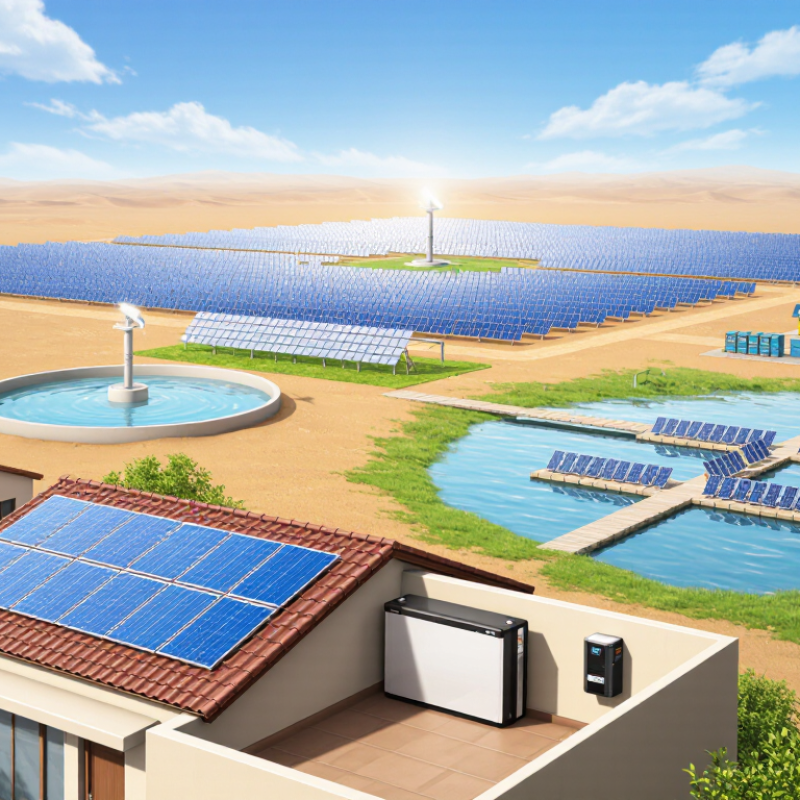
For homes and businesses, rooftop solar paired with a battery can provide daytime power and help shift some use into evening hours. Batteries add cost, so buyers should compare expected savings with local tariffs and their actual consumption. No single answer. Large projects may favor high-efficiency modules, tracking systems, or bifacial panels, depending on land, climate, and design. Remote sites may need standalone systems, storage, and backup generation. Floating solar can suit certain reservoirs, though engineering and maintenance deserve close scrutiny.
Global buyers should compare more than panel prices. Check product and performance warranties, independently verified test results, supplier service capacity, delivery terms, and replacement-part access. Ask how systems perform in heat, dust, humidity, or salt air; a datasheet alone cannot settle that question. Specifications can look reassuring. Yet real operating records matter, and published results may not match every site. Buyers should also verify applicable local requirements with qualified professionals. This guide compares the main solar options and the trade-offs behind them, while recognizing an uncomfortable truth: the cheapest quote is not always the lowest-cost system over its lifetime.
What Defines the Best Solar Options for Global Buyers in 2026
What defines the best solar options for global buyers in 2026 is not the lowest quoted price. It is dependable energy yield, verified durability, and practical support after installation. IRENA reported 473 GW of new renewable capacity in 2023, including 346 GW of solar power. This rapid growth gives buyers more choice, but also makes technical comparison harder.
Look beyond headline efficiency. A suitable system should match local sunlight, roof conditions, grid rules, and seasonal demand. In a hot coastal region, temperature performance and corrosion resistance may matter more than a one-point efficiency gain. In a remote area, spare parts and installer training can determine real performance. IEA’s Renewables 2024 report expects global renewable capacity to expand by almost 5,500 GW between 2024 and 2030. Solar is expected to provide the largest share of this growth.
Reliability needs evidence. Buyers should request independent test results, transparent degradation rates, product traceability, and clear warranty procedures. Financial strength also matters, because a long warranty is weak if service disappears. Pay attention to storage compatibility and recycling pathways. These details are less exciting, but they protect long-term value. The word “best” remains slippery. A high-efficiency system may still disappoint when installation quality is poor, shading is ignored, or maintenance is unavailable. A careful buyer should compare measured yield, total ownership cost, and local service capacity—not just catalogue figures.
What Are the Best Solar Options for Global Buyers in 2026? — What Defines the Best Solar Options for Global Buyers in 2026
The best choice depends on climate, available space, project scale, local regulations, and total installed cost. Efficiency and temperature figures below are indicative ranges for commercially available products; actual specifications vary by product and test conditions.
| Solar option | Typical module efficiency | Typical temperature coefficient | Strongest use cases | Key advantages | Main considerations | What buyers should check |
|---|---|---|---|---|---|---|
| TOPCon monocrystalline silicon | About 22–24% | Often about −0.29% to −0.35% per °C | Homes, commercial rooftops, and utility-scale projects seeking a widely available high-efficiency option | High power density; broad product availability; bifacial versions are common | Performance, warranty terms, and degradation vary by product; bifacial gains depend on ground reflectivity and system design | Certified datasheets, module dimensions, mechanical-load ratings, degradation warranty, and compatibility with the mounting system |
| Heterojunction (HJT) silicon | About 22–24.5% | Often about −0.24% to −0.30% per °C | Hot climates, space-constrained sites, and projects that value strong high-temperature performance | Typically low temperature-related power loss; high-efficiency and bifacial products are available | Purchase price and supply availability can differ by market; compare whole-system economics rather than module efficiency alone | Temperature coefficient on the exact datasheet, installed cost per watt, local service support, and verified product certification |
| Back-contact (BC) silicon | About 22–25%, depending on cell design and product | Product-specific; commonly around −0.29% to −0.35% per °C | Roofs or sites where high output from limited area is a priority | Contacts on the rear can provide an unobstructed front surface; some products offer very high module efficiency | Specifications differ among back-contact designs; higher efficiency does not automatically mean a lower project cost | Independent certification, output warranty, shade behavior, module size, and the supplier’s local warranty process |
| PERC monocrystalline silicon | About 20–22% | Often about −0.34% to −0.40% per °C | Budget-sensitive projects where established products and competitive pricing are available | Mature, widely understood technology; can offer good value when priced competitively | Generally lower efficiency than newer mainstream cell designs; availability and pricing vary by region | Compare delivered and installed cost, product age, warranty coverage, and availability of replacement modules |
| Cadmium telluride (CdTe) thin film | About 18–20.5% | Product-specific; often around −0.25% to −0.32% per °C | Large utility-scale sites, including some hot or diffuse-light environments | Thin-film design; some products have favorable temperature behavior and strong utility-scale deployment experience | Fewer suppliers and product formats in many markets; project economics depend on logistics, scale, and local support | Local import rules, recycling and end-of-life arrangements, bankability requirements, and long-term service availability |
| Copper indium gallium selenide (CIGS) thin film | About 15–20%, depending on product format | Product-specific; check the manufacturer’s datasheet | Specialty applications, lightweight or flexible designs, and projects with unusual surface requirements | Can be made in lightweight or flexible formats; useful where conventional rigid modules are unsuitable | Product availability, module efficiency, and certification vary considerably; not every format suits standard rooftop systems | Structural and fire approvals, mounting requirements, certified performance, and replacement-product availability |
Global buying checklist: Confirm local grid and building-code compliance, recognized product certification, warranty enforceability in the installation country, shipping and import costs, installer capability, and end-of-life requirements. For most buyers, the best option is the one that delivers reliable lifetime energy at a competitive total installed cost—not necessarily the module with the highest efficiency.
Related Posts
-
How to Choose the Best PV Panels for Your Solar Energy Needs?
-
10 Best Solar Energy Products for Global Buyers
-
2026 How to Install Solar Panels at Home Efficiently?
-
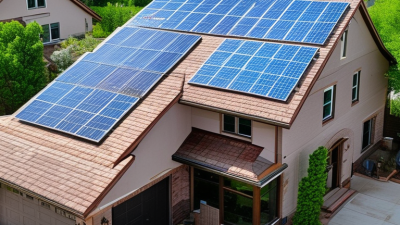
How to Choose the Best Solar Options for Your Home?
-
How to Choose Solar Panels for Home Use in 2026?
-
China Top Solar Energy Panels Suppliers for Global Buyers