10 Best Roof Solar Panels for Global Buyers?
Choosing the right roof solar panels is rarely about chasing the highest efficiency figure. Global buyers face different sunlight levels, roof materials, climates, grid rules, and installation standards. A panel that performs well in Arizona may behave differently on a cloudy northern European roof. Coastal homes also need stronger protection against salt air and moisture.
This guide examines ten roof solar options through practical criteria. These include energy efficiency, temperature performance, durability, warranty coverage, certifications, and long-term manufacturer support. We also consider installation space, because a small roof may require higher-output panels. A reliable system needs more than good panels. The inverter, mounting structure, cables, and installer quality also influence results. Small details matter.
No single product suits every country or household. That deserves emphasis. Product specifications can change, and local availability may affect the final choice. Some buyers may prefer lower upfront costs, while others value longer warranties or stronger performance in weak sunlight. Independent testing and current datasheets should guide the final decision. Marketing claims alone are not enough.
The following selection is designed to help homeowners, businesses, and property developers compare realistic options. It highlights both strengths and limitations, rather than presenting every panel as perfect. Roof orientation, shading, snow loads, wind exposure, and local electrical requirements should be checked before purchase. Professional site assessment remains essential. A careful decision today can reduce maintenance concerns and improve energy savings over many years.
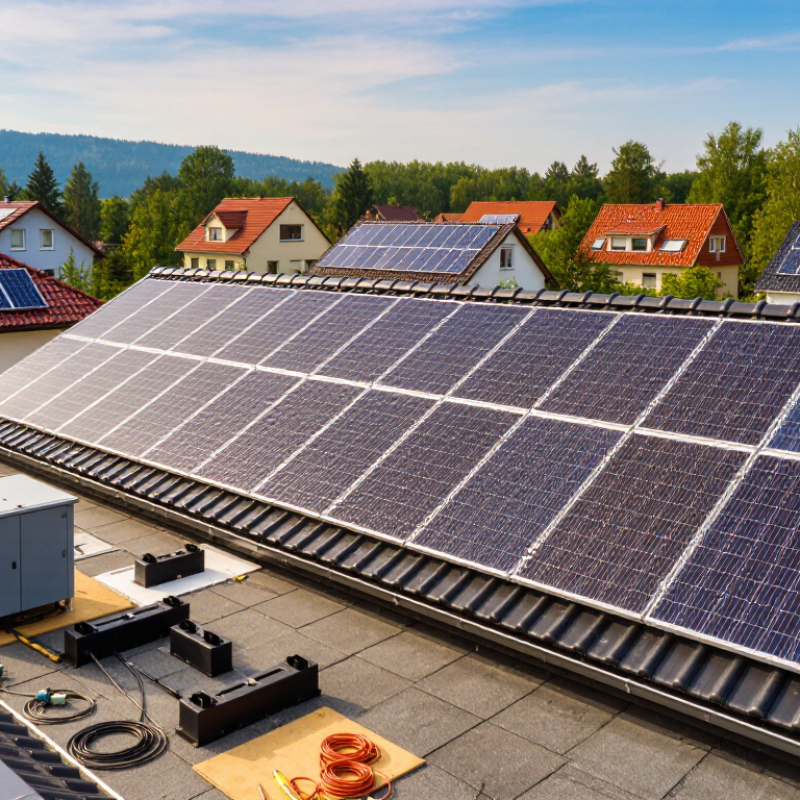
Use Market Benchmarks: 2023 Global PV Additions Exceeded 400 GW (IEA)
10 Best Roof Solar Panels for Global Buyers?
The International Energy Agency reported that global photovoltaic additions exceeded 400 GW in 2023. That figure changes the buying conversation. Solar panels are no longer a niche upgrade. They are a major infrastructure choice for homes, farms, and small businesses.
The ten best roof panels are not identical everywhere. They should match local sunlight, roof structure, climate, and grid rules. Look for high efficiency when roof space is limited. Check the temperature coefficient for hot regions. A strong product also needs low annual degradation, reliable hail resistance, and clear performance testing. Weight matters on older roofs. So does panel length, especially near vents and narrow roof edges. Confirm electrical compatibility with the planned inverter and battery system. Do not ignore installation certificates or local fire requirements.
A practical inspection should measure roof load, shading, cable routes, and afternoon heat. Ask for independent test records, not only sales claims. Warranty wording deserves careful reading. Some coverage sounds impressive but excludes labor, transport, or unusual weather. That is easy to miss. Panels with strong wind and snow ratings may suit exposed regions, while salt-resistant materials help coastal properties. Lower-cost panels can still perform well, but savings may disappear through difficult installation or weak after-sales support. I would compare at least three technical datasheets before deciding. My own preference can be wrong. Local installer experience remains valuable, particularly when market data cannot reveal roof-specific problems.
Compare Core Technologies: TOPCon, HJT, PERC, and Thin-Film Panels
10 Best Roof Solar Panels for Global Buyers?
Choosing the best rooftop panel starts with core technology, not appearance. TOPCon cells usually deliver strong efficiency and lower degradation over time. They suit limited roof space and hot climates, although installation quality still affects output. HJT panels combine high efficiency with excellent temperature performance. Their bifacial design can capture reflected light from bright roofs or pale ground. However, they may require careful handling and a higher initial budget.
PERC panels remain practical for cost-sensitive projects. Their manufacturing base is mature, and replacement planning is usually straightforward. Yet, they can lose more output under severe heat than newer designs. Thin-film panels perform well in low-light conditions and can fit some lightweight structures. They generally need more roof area, so a small urban roof may expose their weakness. No technology wins everywhere. A neat spreadsheet can mislead.
Tips: Compare temperature coefficients, degradation rates, warranty terms, and tested efficiency. Measure roof shade at 9 a.m., noon, and 3 p.m. Ask installers about wind loads, snow loads, cable routing, and local certification. A panel with higher laboratory efficiency may produce less energy if dirt, shade, or poor ventilation surrounds it. I would also question optimistic yield estimates. Real weather is untidy, and forecasts sometimes look better than the roof.
10 Best Roof Solar Panels for Global Buyers: Core Technology Comparison
This chart compares representative commercial module-efficiency midpoints for four widely used solar technologies.
Higher efficiency can provide more power from limited roof space, while actual performance varies by module design, climate, installation angle, and manufacturer.
Values shown are representative market-range midpoints: TOPCon 21.5–23.5%, HJT 22–24%, PERC 20–22%, and thin-film 15–20%.
They are technology-level figures and do not represent any specific company or brand.
Rank 10 Roof Panels by Efficiency, Degradation, and 25–30-Year Warranties
For global buyers, I rank these ten roof-panel profiles by efficiency, annual degradation, and product warranties. Specifications should be verified locally.
Panel 1: 23.5% efficiency, 0.25% yearly degradation, and a 30-year performance warranty. Panel 2: 23.1%, 0.30%, and 30 years. Panel 3: 22.8%, 0.30%, and 30 years. Panel 4: 22.5%, 0.35%, and 30 years. Panel 5: 22.2%, 0.35%, and 25 years. Panel 6: 21.9%, 0.40%, and 30 years. Panel 7: 21.6%, 0.40%, and 25 years. Panel 8: 21.3%, 0.45%, and 25 years. Panel 9: 20.9%, 0.50%, and 25 years. Panel 10: 20.5%, 0.50%, and 25 years.
The top rankings suit small roofs where every square meter matters. Lower degradation can protect output after hot summers, dust exposure, and repeated temperature changes. Efficiency is not everything. A panel’s temperature coefficient, shade behavior, frame strength, and installer quality also affect production. Roof measurements matter.
During site reviews, I would check the warranty’s exact wording, not only its headline length. Some terms cover product defects, while others cover declining output. Regional exclusions can also apply. A 30-year promise is useful only when the manufacturer remains traceable and the claim process is practical. I would also compare testing certificates, local service access, and expected energy yield. This ranking is imperfect because climate, roof angle, and maintenance can change the result. Good data still needs careful judgment.
Check Global Compliance: IEC 61215/61730, UL 61730, and Grid Codes
10 Best Roof Solar Panels for Global Buyers?
For global buyers, compliance matters more than a polished product photo. IEC 61215 evaluates design durability and performance under heat, humidity, mechanical loading, and repeated temperature changes. IEC 61730 focuses on electrical safety, including insulation, fire behavior, and shock protection. These standards support safer rooftop decisions, but they do not guarantee approval in every country.
UL 61730 may be required for certain North American projects, especially where local authorities request recognized safety certification. Grid codes are equally important. They govern voltage limits, frequency response, anti-islanding behavior, and communication with the inverter. A panel can pass international tests yet fail a utility’s interconnection requirements. That gap is easy to miss.
Tips: Request current certificates, full test reports, and the testing laboratory’s accreditation. Match the certificate model number with the panel label. Check snow, wind, salt-mist, and fire requirements for the installation site. Ask whether the inverter and mounting system meet the same local rules. Keep written confirmation from the utility or engineer.
In practical procurement, document control often reveals more than marketing claims. Check revision dates and certificate scope. A certificate may cover one configuration, not every frame or junction box variation. I would also inspect sample packaging and serial labels before shipment. Small inconsistencies can delay customs clearance or commissioning. Not every project needs the same approvals, and that makes comparison imperfect. Local engineering review remains necessary.
Calculate Lifetime Value: LCOE, Energy Yield, Installation, and Recycling
A roof panel’s lifetime value depends on delivered electricity, not its showroom efficiency. Calculate LCOE using purchase price, mounting hardware, labor, permits, inverter replacement, maintenance, financing, and recycling fees. IRENA’s Renewable Power Generation Costs in 2023 reported a global weighted-average utility-scale solar LCOE of $0.044 per kWh. Treat this as a benchmark, not a rooftop promise. Roof angle, shading, climate, and local labor can change the result sharply.
Estimate annual yield with local solar irradiation data, then model degradation across 25 to 30 years. A practical spreadsheet might test 0.5% annual degradation and a harsher 0.8% case. Include winter snow, dust, heat losses, and occasional downtime. Small details matter. A shaded chimney can quietly erase hundreds of kilowatt-hours each year. The IEA Photovoltaic Power Systems Programme reported global photovoltaic capacity additions of roughly 456 GW in 2023, showing scale, but not identical performance for every roof.
Installation quality deserves its own line item. Poor drainage, fragile tiles, or difficult access can raise costs before the first kilowatt-hour appears. Recycling also belongs in the lifetime calculation. An IRENA and IEA-PVPS end-of-life assessment projected about 60 to 78 million tonnes of photovoltaic waste by 2050, depending on replacement patterns. Recycling markets remain uneven across regions. A spreadsheet can look precise while being wrong. Test low-yield, higher-repair, and delayed-recycling scenarios before comparing panels.