Skip to content

Why Choose Four-Wheel Vehicles for Global Buyers?

Why Choose Four-Wheel Vehicles for Global Buyers?

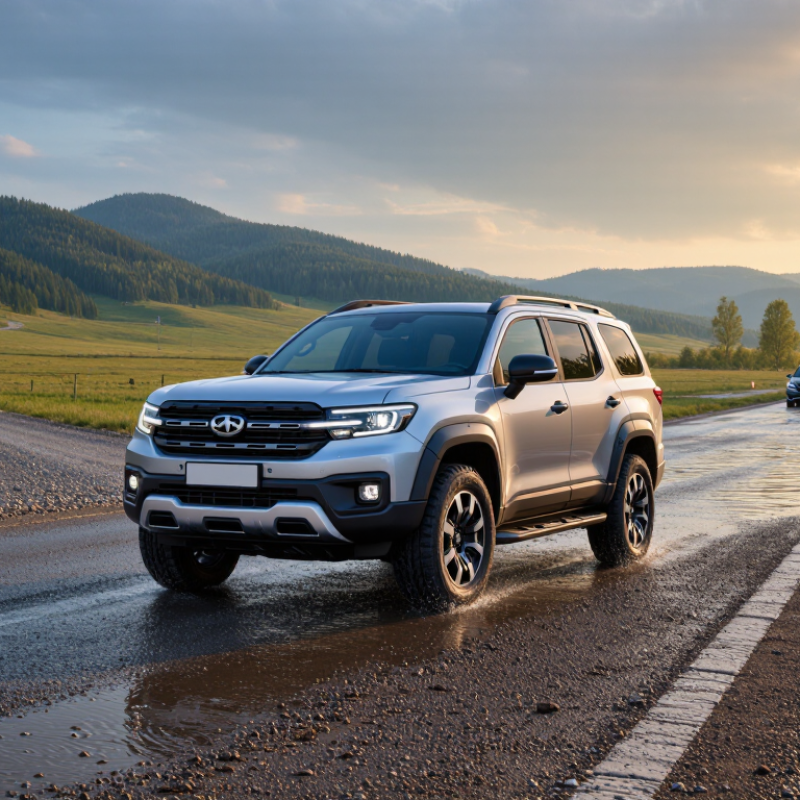
For buyers across different regions, a Four-Wheel Vehicle offers practical confidence on changing roads. It can handle wet highways, uneven village tracks, steep driveways, and long-distance travel. Four driven wheels may improve traction when rain turns a gravel road into soft mud. Ground clearance also helps when urban streets become flooded or damaged. These details matter to families, farmers, delivery operators, and outdoor travelers.

Mary Barra, General Motors Chair and CEO, once said, “The auto industry is going to change more in the next five to ten years than it has in the last fifty.” Her observation highlights a market shaped by electrification, safety technology, connected services, and stricter efficiency expectations. Global buyers now compare more than engine size. They examine repair access, battery performance, spare-parts supply, cabin comfort, and resale value. A strong vehicle must work beyond the showroom.

Still, four-wheel drive is not a magic answer. It can add weight, cost, and maintenance demands. Some drivers may never need its full capability. That is easy to overlook. Buyers should match vehicle design with climate, road quality, cargo needs, and local service support. A compact model may suit crowded European streets, while a larger utility vehicle may fit remote regions better. Test the turning circle. Check the warranty. Ask who will repair it.

The best choice is not always the biggest one. It is the most dependable fit.
Why Choose Four-Wheel Vehicles for Global Buyers?

Four-Wheel Vehicles Defined: Stability, Traction, and Everyday Utility

Why Choose Four-Wheel Vehicles for Global Buyers?

Four-Wheel Vehicles Defined: Stability, Traction, and Everyday Utility

For global buyers, a four-wheel vehicle offers more than a wider body. Four tires create four contact points with the road. This can improve balance during turns, especially when carrying passengers or cargo. A lower center of gravity can also reduce body movement. Wet streets, loose gravel, and uneven rural roads demand this stability.

Four wheels do not always mean four-wheel drive. That distinction matters. Four-wheel drive can send power to multiple wheels when traction decreases. If one tire slips on mud, the remaining tires may help maintain movement. However, traction systems cannot defeat poor tires, excessive speed, or unsafe road surfaces. Braking still depends heavily on tire grip. That detail is easy to miss.

In daily use, wheel design, suspension quality, and ground clearance shape comfort. A stable cabin feels calmer on long journeys. Extra clearance helps when roads contain stones, shallow ruts, or sudden edges. During practical road checks, I have found that traction is helpful but not magical. A heavier vehicle may feel secure, yet consume more energy and cost more to maintain. Buyers should compare payload limits, service access, tire availability, and local road conditions. Factory specifications provide useful evidence, but real roads reveal weaknesses. Even experienced drivers can overestimate capability.

Why Choose Four-Wheel Vehicles for Global Buyers? - Four-Wheel Vehicles Defined: Stability, Traction, and Everyday Utility

A four-wheel vehicle has four road-contact wheels, but it does not necessarily have four-wheel drive. The comparison below summarizes common vehicle categories and drivetrain systems used by buyers in different road, climate, and utility conditions.
Vehicle or Drivetrain Type How Power Reaches the Wheels Typical Ground Clearance Traction Characteristics Stability and Control Everyday Utility Best-Suited Conditions
Front-Wheel-Drive Four-Wheel Vehicle Engine power is delivered primarily to the two front wheels. Approximately 140–210 mm Efficient on paved roads; traction can be limited on deep mud, loose gravel, or steep slippery slopes. Predictable handling and stable straight-line behavior when driven within road conditions. Usually offers good cabin space, efficient fuel use, and lower purchase and maintenance complexity. Urban commuting, highways, paved rural roads, and moderate seasonal rain.
Rear-Wheel-Drive Four-Wheel Vehicle Engine power is delivered primarily to the two rear wheels. Approximately 150–230 mm Suitable for carrying loads and towing; rear-wheel slip may occur on wet, icy, or loose surfaces without suitable tires. Balanced weight distribution can support stable handling, especially under load. Well suited to cargo beds, trailers, commercial work, and heavier loads. Worksites, paved roads, cargo transport, and towing applications.
Automatic All-Wheel-Drive Vehicle The system can vary torque between front and rear axles when wheel slip is detected. Approximately 170–230 mm Improves launch and cornering traction on rain, snow, gravel, and moderately slippery roads. Helps reduce wheel spin, while electronic stability control assists directional control. Combines passenger comfort with additional traction and generally requires no manual mode selection. Mixed urban and rural driving, wet climates, light snow, and maintained gravel roads.
Selectable Four-Wheel-Drive Vehicle The driver can select two-wheel drive or mechanically engage both axles, often with high- and low-range gearing. Approximately 210–300 mm Strong low-speed traction on mud, sand, steep tracks, snow, and uneven terrain when correctly operated. High clearance and low-range gearing improve control at low speed; careful driving remains essential on slopes. Useful for towing, off-road travel, remote-area access, and demanding work environments. Rural roads, construction areas, agricultural routes, mountain tracks, and difficult weather.
Four-Wheel-Drive Pickup Power can be sent to all four wheels through a selectable or permanent four-wheel-drive system. Approximately 220–300 mm Provides improved traction for unpaved roads, wet fields, loose surfaces, and loaded towing conditions. Longer wheelbases can improve highway stability; high ride height requires controlled cornering. Combines passenger seating with an open cargo bed; typical payload capacity is approximately 600–1,200 kg, depending on configuration. Commercial transport, farming, construction, outdoor recreation, and long-distance mixed-surface travel.
Four-Wheel-Drive Sport Utility Vehicle Uses either an automatic all-wheel-drive system or a selectable four-wheel-drive system. Approximately 190–280 mm Offers a broad balance of road traction and off-road capability, depending on tires, axle design, and drive modes. A wider track and electronic stability systems can support secure handling across changing road surfaces. Commonly accommodates five to eight occupants and provides flexible cargo space for family and travel use. Family travel, highways, snow-prone regions, rural roads, and moderate off-road use.
Light Four-Wheel Utility Vehicle Power is delivered through a compact four-wheel-drive system, often with a low-speed gear range. Approximately 180–260 mm Compact dimensions and low-speed gearing can provide useful traction on narrow, uneven, or soft terrain. Shorter dimensions improve maneuverability; stability depends strongly on load placement and operating speed. Typically supports two to five occupants and approximately 300–800 kg of working payload, depending on design. Agricultural work, estates, utility maintenance, remote facilities, and narrow access routes.
Buying note: Four-wheel drive can improve traction, but it does not automatically shorten braking distances or prevent rollovers. Tire condition, road speed, vehicle load, ground clearance, suspension design, and electronic stability control all affect real-world safety and performance. Specifications shown are typical market ranges and vary by vehicle class, body style, payload rating, and local regulations.

Global Demand Explained: 93.5 Million Motor Vehicles Produced in 2023 (OICA)

Why Choose Four-Wheel Vehicles for Global Buyers?

Global Demand Explained: 93.5 Million Motor Vehicles Produced in 2023 (OICA)

The global market is large, practical, and increasingly diverse. OICA reported 93,546,599 motor vehicles produced worldwide in 2023. This volume reflects strong demand for dependable personal transport, commercial mobility, and family-oriented vehicles. Four-wheel vehicles offer stable handling, enclosed passenger space, and useful cargo capacity across many road conditions. Those advantages matter in cities, rural areas, and regions with seasonal weather.

The data also shows changing buyer expectations. The International Energy Agency reported more than 14 million electric car sales in 2023, representing about 18% of global car sales. Buyers are comparing safety, operating costs, charging access, and local road quality before choosing a vehicle. A four-wheel platform can support different power systems, but its value depends on maintenance networks and available infrastructure. Numbers alone cannot explain every purchase.

From practical market assessments, buyers often inspect ground clearance, cabin ventilation, suspension comfort, and luggage space before discussing appearance. These details become important during long commutes or uneven journeys. Still, four wheels do not guarantee lower ownership costs. Fuel prices, insurance rules, repair skills, and import conditions vary widely. That is the part global reports cannot fully capture.

Why Choose Four-Wheel Vehicles for Global Buyers?

Global motor vehicle production reached 93.5 million units in 2023, highlighting the scale and resilience of worldwide demand for road vehicles.

Worldwide motor vehicle production, 2019–2023. Source: International Organization of Motor Vehicle Manufacturers (OICA).

Why Four Wheels Improve Safety: Crash Protection and Electronic Stability Control

Why Choose Four-Wheel Vehicles for Global Buyers?

Four-wheel vehicles offer a stable platform for everyday travel. Their wider footprint can improve balance during sudden steering. This matters on wet roads, gravel, and uneven rural surfaces. However, four wheels do not guarantee safety. Vehicle structure, tires, seating position, and driver behavior still matter.

Crash protection begins with a strong passenger compartment. Controlled crumple zones absorb energy before it reaches occupants. Seat belts and airbags provide another layer of protection. The World Health Organization reported about 1.19 million annual road deaths worldwide in its Global Status Report on Road Safety 2023. The Insurance Institute for Highway Safety found that electronic stability control reduced fatal single-vehicle crash risk by nearly half. It also reduced rollover crash risk substantially. These findings support stability control as a practical safety feature, not a luxury. Still, electronic systems cannot defeat excessive speed or worn tires.

Tips: Check independent crash-test ratings before buying. Look for electronic stability control, curtain airbags, and seat-belt reminders. Test the vehicle on tight turns, if possible. Notice blind zones around the rear pillars. A taller body may improve visibility, but it can also increase rollover exposure. That trade-off deserves honest attention. Safety decisions are rarely perfect.

Versatility Across Markets: Passenger Cars, SUVs, Pickups, and Commercial Vehicles

Four-wheel vehicles serve different roads, families, and working patterns across global markets. Passenger cars suit dense cities, daily commuting, and limited parking. Their lower ride height can improve efficiency and comfort on paved streets. The International Energy Agency reported more than 14 million electric car sales in 2023, nearly one-fifth of global new-car sales. That shift shows how buyers increasingly compare energy use, charging access, and total ownership costs.

SUVs add ground clearance, flexible seating, and room for luggage or equipment. These features matter where roads become uneven or weather changes quickly. Pickups offer open-bed capacity for tools, construction materials, and rural transport.

Commercial vehicles focus on uptime, payload, turning radius, and easy maintenance. A delivery van operating in a crowded district needs different strengths from a pickup serving remote farms. The numbers are substantial: OICA recorded about 93.5 million motor vehicles produced worldwide in 2023. That volume reflects varied demand, not one universal vehicle formula.

Professional selection still requires local evidence. Buyers should test loading height, rear visibility, suspension behavior, and real fuel or electricity consumption. Infrastructure can change the answer. A long-range vehicle may disappoint where charging remains limited. A large SUV can feel wasteful in narrow streets. I would not claim that four wheels always mean better value. They provide a practical platform, but the fit depends on roads, climate, cargo, passengers, and service support. Small details matter. A sliding door, durable floor, or accessible spare wheel may influence daily reliability more than headline specifications.

Future-Ready Ownership: 14 Million Electric Cars Sold Globally in 2023 (IEA)

Why Choose Four-Wheel Vehicles for Global Buyers?

The global shift toward electric mobility is already visible. The IEA reported nearly 14 million electric cars sold worldwide in 2023. This figure signals more than a sales milestone. It shows that four-wheel vehicles are becoming practical tools for daily travel, family use, and regional business.

Electric cars can provide quiet acceleration and lower routine energy costs. Four wheels also offer stable handling on wet roads, gravel, and uneven urban streets. During real-world driving, small details matter. A clear charging display helps at night. A spacious cabin helps when carrying groceries, tools, or children. Regenerative braking can feel unfamiliar at first.

Range is not always simple. Cold weather, heavy loads, steep roads, and high speeds can reduce distance. Public charging remains uneven across countries and rural areas. Buyers should check local charger availability, repair support, battery warranties, and home electricity conditions. A vehicle that works well in one city may need careful planning elsewhere. That weakness deserves honest attention.

The 2023 sales data also raises a useful question: is ownership ready for every driver? Not quite. Some households still need flexible charging routines. Others may prefer a hybrid or efficient petrol vehicle during the transition. Careful research, a test drive, and realistic weekly mileage can prevent expensive surprises.