Skip to content

How to Implement a Single High-Performance API Effectively?

Implementing a Single High-Performance API can transform your organization's efficiency. This powerful solution serves various applications. By prioritizing speed and reliability, businesses can enhance user experiences.

Achieving a high-performance API requires careful planning. Developers must consider architecture and scalability. A clear focus on response time is essential. Continuous monitoring helps identify bottlenecks. Despite having a strong plan, challenges may arise. You might face integration issues or unexpected downtime. Reflecting on these difficulties is vital for improvement.

Optimization is the key to a successful API. Streamlining processes can boost performance. Proper documentation is crucial for team collaboration. Ensuring that everyone understands the system will minimize errors. The journey to create a Single High-Performance API is complex, yet it can yield significant rewards.
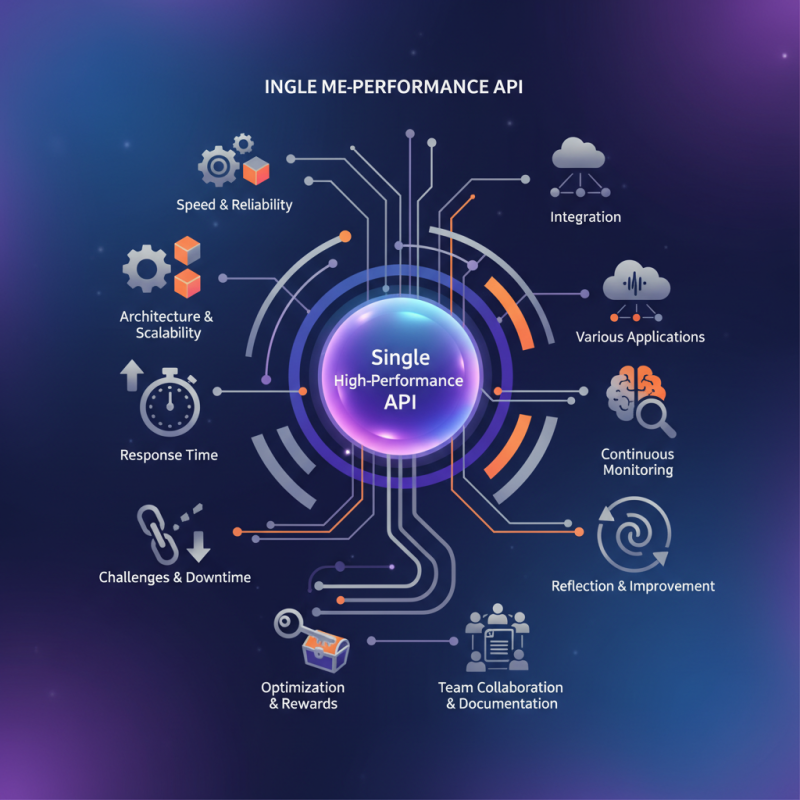
How to Implement a Single High-Performance API Effectively?

Understanding the Concept of High-Performance APIs

In the digital landscape, high-performance APIs stand as critical components of successful applications. These interfaces facilitate communication between different software systems. A well-designed API can significantly enhance the speed and efficiency of data exchange. Speed often determines user satisfaction. Slow and laggy APIs can frustrate users and lead to drop-offs.

Understanding the concept of high-performance APIs involves several technical choices. For instance, selecting the right data format can impact performance. JSON or XML might be common, but their response times vary. Caching is another essential aspect worth considering. It can reduce the load on servers by storing responses for future requests.

However, striving for high performance is not without challenges. Balancing speed with security sometimes creates a conflict. Implementing complex security measures can slow down API response times. It’s crucial to find the right balance. Regular testing and profiling can reveal performance bottlenecks, yet many developers overlook this step. In the quest for performance, one may unintentionally sacrifice usability. Thus, ongoing reflection and adjustment are key.

High-Performance API Response Times

Key Benefits of Implementing a Single High-Performance API

Implementing a single high-performance API offers several key benefits. One major advantage is improved efficiency. A unified API reduces the complexity that often comes with managing multiple interfaces. Fewer endpoints mean less overhead for both developers and users. This can lead to faster response times, which is crucial for applications demanding real-time data.

Another benefit is better resource management. By streamlining your design, it becomes easier to allocate resources effectively. A singular API can handle more simultaneous requests without crashing or becoming sluggish. This can make a significant difference during peak usage times. However, designing a high-performance API also has challenges. Balancing speed and functionality can be tricky, and it often requires regular testing and feedback.

Security is another aspect to consider. A single API can present a larger target for potential breaches, requiring robust protection mechanisms. Implementing a strong security framework is essential yet can complicate development. While a unified API aims to simplify operations, developers must remain vigilant about maintaining its integrity.

How to Implement a Single High-Performance API Effectively? - Key Benefits of Implementing a Single High-Performance API

Benefit Description Impact Case Study Example
Improved Performance Consolidates multiple API calls into a single request, reducing latency. Faster response times, better user experience. E-commerce site streamlining payment processing.
Cost Efficiency Reduces server load and operational costs by minimizing the number of requests. Lower infrastructure costs, increased resource allocation. SaaS provider reducing server usage.
Enhanced Security Centralizes authentication and authorization, reducing attack vectors. Improved security posture, lower risk of data breaches. Financial service implementing a unified security protocol.
Easier Maintenance Simplifies updates and debugging by consolidating multiple APIs. Quicker deployment of features and fixes. Tech company reducing maintenance time with modular API.
Scalability Allows easier scaling of functionalities as demand grows. Better handling of increased traffic and data load. Streaming service adapting to user growth.

Essential Design Principles for High-Performance API Development

Creating a high-performance API requires attention to essential design principles. One key principle is simplicity. A straightforward design makes it easier for developers to understand and use. Aim for a clean and intuitive interface. This minimizes the learning curve and leads to faster adoption. However, simplicity can sometimes be challenging. Striking a balance between functionality and ease of use is crucial.

Another important principle is scalability. Your API must handle increased load without compromising performance. Plan for growth from the start. Use efficient data structures and algorithms to support this. Be mindful that not all solutions scale equally. It may require reflection and testing to find the right approach. Load testing helps identify potential bottlenecks early in the development cycle.

Responsiveness also matters. Users expect quick results. Optimize latency by reducing the number of calls needed to fetch data. Consider using caching strategies to enhance speed. Yet, remember that over-caching can lead to outdated information. Always evaluate the trade-offs involved. Balancing speed and accuracy is a complex but vital aspect of high-performance API design.

Best Practices for Testing and Monitoring API Performance

When it comes to API performance, testing and monitoring are crucial. Effective testing helps identify bottlenecks early. Use tools that simulate real user behavior. This is essential for understanding how the API behaves under load.

Tips: Focus on response times. Set benchmarks for acceptable performance. Monitor metrics like latency and throughput. Also, analyze error rates. Errors can indicate deeper issues within the system.

Continuous monitoring is vital once the API is live. Regularly check performance metrics and user feedback. Be alert for unexpected slowdowns. These can arise from numerous factors, like increased traffic or code changes. Act quickly to resolve issues. Reflect on monitoring results; they’ll guide future improvements.

Tips: Automate the monitoring process if possible. Implement alerts for anomalies. Set clear response strategies for issues. This keeps performance on track.

Strategies for Scaling and Optimizing API Functionality

Implementing a high-performance API requires careful thought. To scale effectively, focus on optimizing performance from the start. Consider how you manage resources. Limit connection pools to avoid bottlenecks. Aim for minimal latency. Utilize caching systems to store frequent requests. This can dramatically boost response times.

Tips: Monitor your API’s usage patterns. Identify slow endpoints and analyze their performance. Small changes can lead to significant improvements. Understand your data access patterns. Optimize database queries to reduce time spent on data retrieval. Adjust indexing strategies based on query frequency.

It's important to acknowledge the challenges. Sometimes, optimization efforts may not yield expected results. Experiment with different strategies. Assess their impact on performance. Pay attention to user feedback. This can provide insights into areas needing improvement. Continuous reflection can help refine your approach.