Skip to content

10 Essential Tips for Homeowners Considering Solar Panels

Considering solar panels for homeowners is a significant decision. These energy-efficient systems can lower electricity bills and promote sustainable living. However, the process can be overwhelming. Many factors must be evaluated before installation.

Solar panels are not just a trend; they are a smart investment for many households. Understanding the technology behind solar energy is crucial. Homeowners need to assess their energy needs, available sunlight, and local regulations. Each home is unique, which means there are no one-size-fits-all solutions.

Moreover, finding the right installer requires research. Not all companies offer the same level of expertise or quality. Homeowners may encounter misleading promotions or deceptive practices, highlighting the importance of thorough vetting. Reflecting on personal circumstances will help in making informed decisions. Embrace the journey while acknowledging its challenges.

10 Essential Tips for Homeowners Considering Solar Panels

Understanding the Basics of Solar Energy for Homeowners

Solar energy is an efficient and sustainable option for homeowners. Understanding the basics is crucial for making informed decisions. Solar panels convert sunlight into electricity through photovoltaic cells. These cells generate direct current (DC) electricity, which is then converted to alternating current (AC) for home use. This process can significantly reduce electricity bills, making solar energy an appealing choice.

However, homeowners should consider installation costs. Initial expenses can be high, but incentives may offset these costs. The effectiveness of solar panels also depends on your location and roof orientation. Not all homes are suitable for solar installations. Research potential shadowing from trees or nearby buildings. Also, consider local regulations and guidelines that may affect installation.

Investing in solar energy requires careful thought. Long-term commitment is necessary. You’ll need to assess your energy needs and potential savings. Look into maintenance requirements too. Over time, systems may require repairs or enhancements. Understanding both the benefits and challenges of solar energy is vital to maximizing your investment.

10 Essential Tips for Homeowners Considering Solar Panels

Tip Number Tip Description Benefits Considerations
1 Evaluate your energy needs Identify your energy consumption patterns Consider seasonal variations
2 Assess your roof space Maximize the area available for solar panels Check for obstructions
3 Investigate local incentives Save money through rebates and tax credits Understand eligibility criteria
4 Research different technologies Choose the best solar technology for your needs Balance cost and efficiency
5 Get multiple quotes from contractors Find competitive pricing Check reviews and references
6 Understand financing options Make solar more affordable through loans or leases Evaluate long-term costs
7 Evaluate system size and capacity Achieve optimal energy production Consider future energy needs
8 Check warranties and guarantees Ensure long-term protection of your investment Understand terms and conditions
9 Plan for maintenance and upkeep Ensure systems operate effectively Consider service costs
10 Monitor your solar system Track performance and savings Identify issues early

Evaluating Your Home’s Suitability for Solar Panel Installation

10 Essential Tips for Homeowners Considering Solar Panels

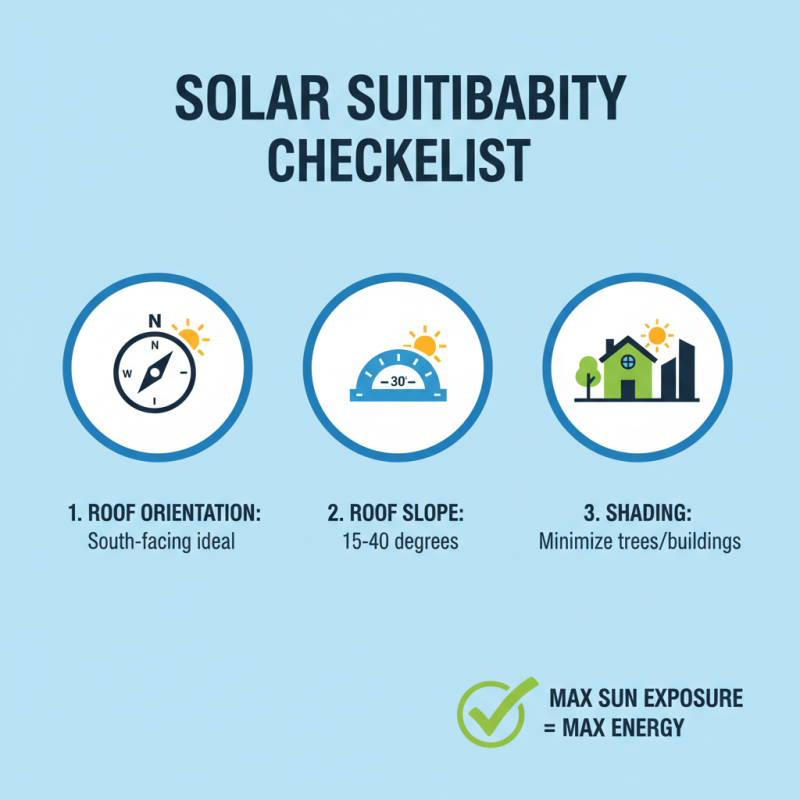
When evaluating your home’s suitability for solar panel installation, consider your roof’s orientation and slope. South-facing roofs typically receive the most sunlight. A roof angle of 15 to 40 degrees is ideal for maximum exposure. If your roof is shaded by trees or buildings, energy production might be limited. This is a crucial aspect to assess.

Inspect the size of your roof as well. A larger roof can accommodate more panels, leading to higher energy output. Look for existing damage too. Any repairs needed might delay or complicate installation. It's vital to keep these factors in mind.

Consider local climate as well. Areas with consistent sunlight often yield the best results. However, heavy rainfall or frequent storms could impact efficiency. It’s essential to understand these conditions. Seek professional advice to get customized insights for your specific situation. This thorough evaluation will help ensure that the investment in solar panels is worth it in the long run.

Exploring Different Types of Solar Panels and Their Benefits

When considering solar panels, understanding the various types available is crucial. Monocrystalline panels are highly efficient and space-saving. They consist of single crystal structures that allow for maximum energy absorption. This type is ideal for homeowners with limited roof space. Their sleek appearance often appeals to aesthetic concerns, despite a higher price tag.

Polycrystalline panels, on the other hand, offer a more budget-friendly option. Composed of multiple crystal fragments, they are less efficient than monocrystalline panels but work well in larger installations. Homeowners may find that these panels generate adequate energy, especially in sunnier climates. However, their bulkier look may not suit every home style.

Thin-film solar panels represent another alternative, offering flexibility and lightweight characteristics. While they have lower efficiency rates, they perform better in high temperatures. This can be beneficial for homeowners in warmer regions. It’s essential to weigh the pros and cons of each type before deciding. A thorough evaluation of your home’s energy needs and aesthetic preferences will lead to a more satisfying investment.

Calculating the Financial Investment and Potential Savings

When homeowners consider installing solar panels, understanding the financial investment is crucial. The initial cost for a residential solar system averages between $15,000 and $25,000 before incentives. However, the long-term savings can be substantial. According to the Solar Energy Industries Association, homeowners can save up to $30,000 over 20 years on energy bills. These savings depend on factors like location, energy consumption, and available tax credits.

Investing in solar panels not only reduces electricity bills but can also increase property value. A study by Zillow found that homes with solar energy systems sold for about 4.1% more than comparable homes without them. While these numbers are hopeful, homeowners should also reflect on potential flaws in their calculations. Energy costs can fluctuate, and performance of panels can vary based on old roofing or shading from trees.

Understanding financing options is essential too. Some homeowners may choose solar loans or leases which can complicate overall savings. It's beneficial to consult multiple sources, including local energy providers and financial institutions, to gauge how solar fits into their financial landscape. Taking time to evaluate both potential benefits and the possibility of future maintenance issues can lead to a more informed decision.

Navigating Government Incentives and Rebates for Solar Energy Systems

Navigating government incentives and rebates for solar energy systems can be daunting. Homeowners often overlook substantial savings available through federal and state programs. The Solar Investment Tax Credit (ITC) offers a 30% federal tax credit for solar panel installations. This measure significantly reduces upfront costs, making solar more accessible for families.

In addition to federal incentives, many states offer their own rebates. According to the Database of State Incentives for Renewables & Efficiency (DSIRE), states like California and New York lead the way in providing financial support. Some local utilities also have incentive programs. These can effectively decrease the payback period of solar investment, often making it feasible within five to seven years.

However, homeowners should remain aware of potential pitfalls. Rebates can vary widely, depending on state budgets and political climates. It’s wise to stay updated on local regulations. The fluctuating nature of these incentives can sometimes create confusion. Proper research is essential to take full advantage of available benefits. Balancing these moving parts is vital for a successful solar journey.