Skip to content

10 Essential Tips for Choosing Solar Energy Products for Your Home

As homeowners increasingly seek sustainable energy solutions, the demand for solar energy products continues to rise. According to a report by the International Renewable Energy Agency, solar power capacity has grown almost 24% annually over the past decade. This growth reflects a significant shift toward eco-friendly living and energy independence. However, with numerous options available, choosing the right solar energy products can be overwhelming.

Industry expert Dr. Emily Thornton emphasizes, "Selecting high-quality solar products is crucial for maximizing energy efficiency." Her insight highlights the importance of informed choices in this evolving market. It's essential to consider factors like efficiency, warranty, and installation costs. Many consumers overlook these details, which can lead to regrets down the line. Not every product suits every home, and understanding individual needs is critical.

In an era where energy costs are rising, making an informed decision is more important than ever. Striking a balance between cost and quality is challenging. This guide aims to provide practical tips for navigating the solar energy products landscape effectively. It’s time to reflect on your home's unique energy needs and take a step toward a sustainable future.

10 Essential Tips for Choosing Solar Energy Products for Your Home

Understanding Your Energy Needs Before Choosing Solar Products

10 Essential Tips for Choosing Solar Energy Products for Your Home

When considering solar energy products, understanding your energy needs is crucial. Start by assessing your energy consumption at home. Track usage over a few months. Look at your electricity bill. This gives a clearer picture of your daily and monthly energy needs. Think about the appliances you use the most. Are there areas where you can reduce usage?

Next, evaluate your roof space and sunlight exposure. Not all roofs are suitable for solar panels. Some may not receive enough sunlight throughout the day. Shade from trees or buildings can impact the efficiency of solar products. If your roof is not ideal, consider other options. Ground-mounted solar systems might be an alternative.

Think about your long-term plans. Will your family grow? Are you planning to buy new devices? Your energy needs might change. It's essential to think ahead. Solar energy products can be a significant investment. If your energy requirements increase significantly, your initial setup may not suffice. Use this reflection to choose wisely.

Evaluating Different Types of Solar Energy Products Available

When evaluating solar energy products for your home, consider various types like solar panels, solar water heaters, and solar batteries. Each type serves different purposes. Solar panels convert sunlight into electricity. Solar water heaters use sun energy to heat water for your daily needs. Solar batteries store energy for later use. This diversity can meet different energy needs.

Tip: Before choosing, assess your home's energy consumption. Understand how much energy you need daily. It helps in selecting the right products. Think about your roof space. Not all roofs are ideal for solar panels. The orientation and shading can impact performance significantly.

Tip: Look for energy-efficient options. Not all products are created equal. Energy certifications can guide you in making a more informed choice. Bad selections can lead to overpaying or insufficient energy supply. It’s essential to balance quality and cost. Research extensively and seek expert advice if needed.

Assessing Cost-Effectiveness and Return on Investment for Solar Solutions

When considering solar energy products for your home, assessing cost-effectiveness is vital. A recent report by the National Renewable Energy Laboratory shows that residential solar systems can yield an average return on investment (ROI) of around 20% over 20 years. This means that for every dollar spent, homeowners can save significantly on energy bills. Additionally, solar energy can increase property value, often by more than $15,000 in some markets.

One important tip is to evaluate installation costs carefully. Costs can vary widely based on location, system size, and type. Look for detailed quotes and compare them. Understanding your potential savings can help you justify the initial investment. Sometimes, financing options can seem attractive but may lead to unexpected costs over time.

Another factor to consider is energy consumption. Analyze your energy needs before choosing a system. Some homeowners may overestimate their requirements, leading to larger, more expensive installations. Realizing your true needs can help you choose the right-sized system. Remember, a system that generates excess energy may not always be worth the cost. Think about your long-term energy goals.

Evaluate available incentives as well. Tax credits and rebates can significantly affect total spending. Make sure to factor these into your calculations for a clearer financial picture. Consider consulting a financial advisor to help navigate these complexities and avoid pitfalls. Every decision counts.

10 Essential Tips for Choosing Solar Energy Products for Your Home

Tip Number Tip Description Estimated Cost ($) ROI Period (Years) Maintenance Cost Per Year ($)
1 Assess Your Energy Needs 500 1 50
2 Research Local Climate Conditions 300 2 30
3 Compare Different Solar Panel Types 1000 3 100
4 Check for Incentives and Rebates 0 0.5 20
5 Select a Reliable Installer 800 4 70
6 Evaluate the Warranty Options 200 1.5 10
7 Consider Battery Storage Solutions 1500 6 150
8 Understand the Installation Process 0 1 5
9 Calculate Long-Term Savings 0 2 0
10 Stay Informed on Technology Advances 0 1 0

Researching Solar Product Certifications and Warranties

When exploring solar energy products for your home, certifications matter. They serve as a benchmark for quality and performance. Look for approvals from recognized organizations. These certifications can indicate durability and efficiency. However, not all products come with them. Skipping this step may lead to poor investment. Research thoroughly to avoid pitfalls.

Warranties are another crucial factor. A solid warranty reflects the manufacturer's confidence in their product. It typically covers performance and components. Check the duration of the warranty. Some products offer limited coverage, which may not be sufficient. Realize that a short warranty could spell trouble in the long run. Pay attention to what’s included and what’s not. It’s worth digging deeper into the fine print.

Budget constraints can influence choices, but don’t overlook quality for savings. Inexpensive options might lack essential features or certifications. Reflect on whether saving upfront costs you more in repairs later. Finding a balance is vital. High-quality solar products can lead to better performance over time. Prioritize long-term benefits over immediate savings. Invest time in research and be critical of the information you find.

Solar Energy Product Certifications and Warranties

Consulting with Professionals for Expert Guidance on Solar Options

10 Essential Tips for Choosing Solar Energy Products for Your Home

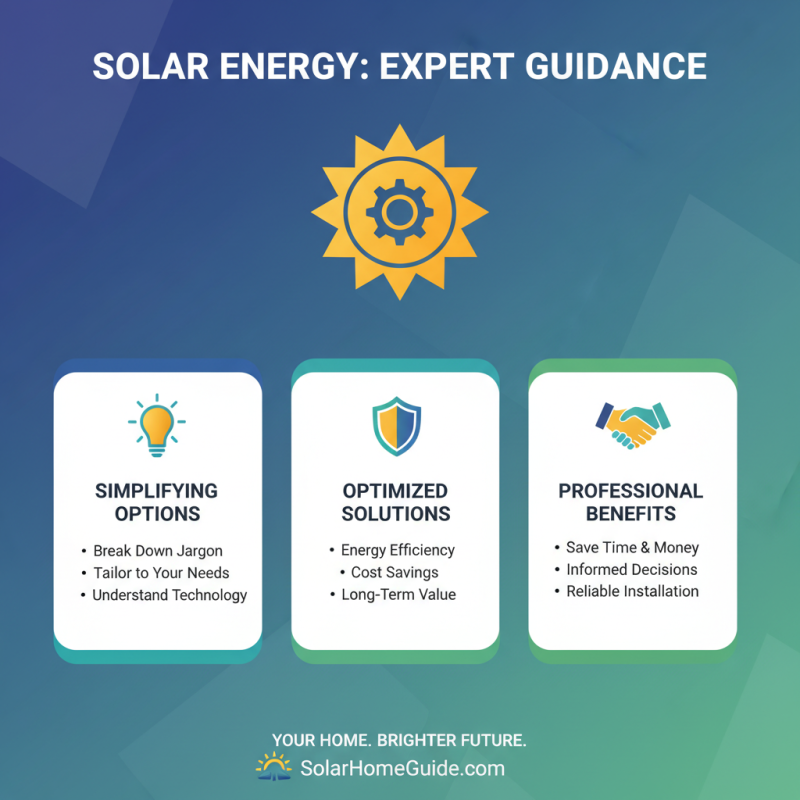
When considering solar energy products for your home, professional guidance can be invaluable. It’s easy to get lost in the technical jargon of solar energy systems. A professional can break down the options available and help identify the best fit for your unique needs. They understand the nuances of energy efficiency and costs, which can save you time and money in the long run.

Consulting experts can shine a light on certain aspects that you might overlook. They often provide insights about local regulations and incentives that are vital for a successful installation. However, it’s important to engage with multiple professionals to gather varied opinions. This also allows for deeper questioning and understanding, which might reveal gaps in your initial research.

While seeking advice, don't hesitate to share your specific energy goals and concerns. This transparency helps professionals tailor their recommendations. But, be open to feedback that challenges your assumptions. It's normal to feel overwhelmed in the decision-making process. Embrace the uncertainty as part of the journey towards a sustainable home energy solution.