How to Choose the Best Solar Panels for Homeowners in 2026?
As we move into 2026, homeowners face a critical decision: selecting the best solar panels for their needs. According to the Solar Energy Industries Association (SEIA), solar installations in the U.S. have increased by 167% since 2020. This surge highlights the growing acceptance of solar technology among homeowners. However, with numerous options available, how can one choose wisely?
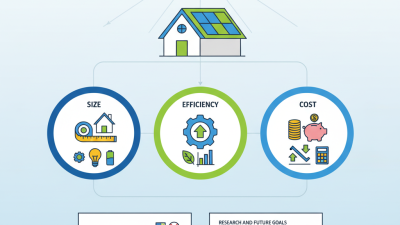
Experts emphasize the importance of doing thorough research. Dr. Emily Chen, a leading authority in renewable energy, stated, “Choosing the right solar panels for homeowners can significantly impact long-term savings and environmental benefits.” Evaluating efficiency ratings, warranties, and installation costs is vital in this process. For instance, high-efficiency panels might have a steeper upfront cost but can yield higher energy savings over time.
Homeowners should also consider local climate and potential shading from trees or buildings. These factors can affect panel performance. While many options exist, not every solar panel suits every home. It's essential to balance aesthetics, efficiency, and budget. Finding reliable sources and expert opinions can help navigate this complex decision-making landscape.
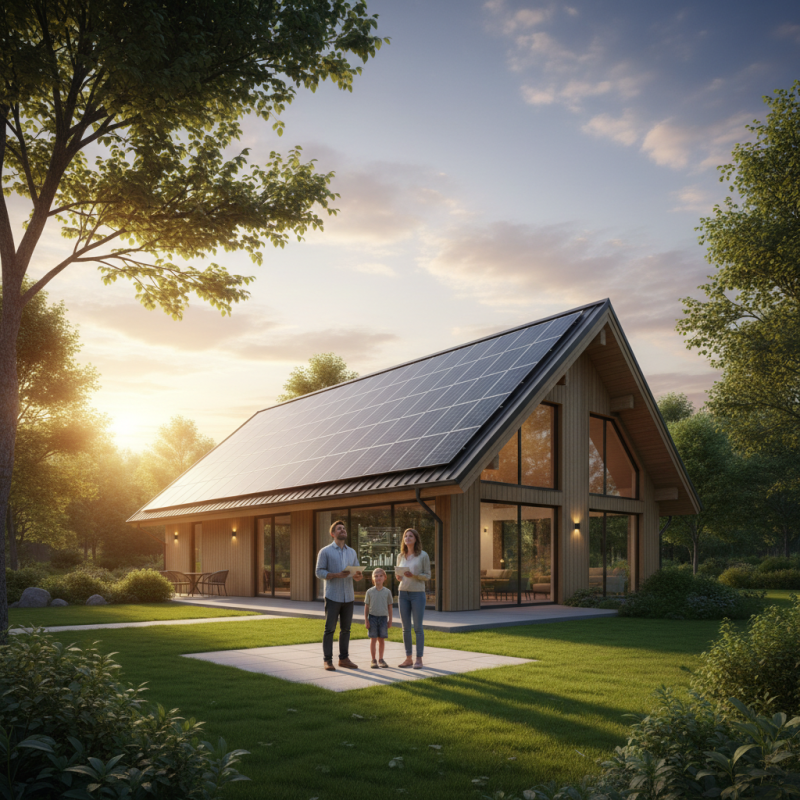
Understanding Solar Panel Types and Technologies Available in 2026
When selecting solar panels in 2026, understanding various types and technologies is crucial. Homeowners have several options, each with unique benefits. For instance, monocrystalline panels are highly efficient, boasting over 20% efficiency rates according to the National Renewable Energy Laboratory (NREL). However, they often come at a higher price point. Polycrystalline panels maintain decent efficiency levels of around 15-17% and are usually more affordable. Thin-film technology presents a lightweight solution, ideal for unconventional rooftops, but may offer lower efficiency.
Tips: Consider your roof's shape and orientation when selecting panel types. Some designs may not perform as well on shaded or uneven surfaces.
Emerging technologies are also transforming the solar landscape. Bifacial panels, which capture sunlight on both sides, can increase energy output significantly. Battery storage integration is another innovation, becoming increasingly vital as more homeowners seek energy independence. Reports indicate that energy storage installations are predicted to grow by 25% annually through 2026.
Tips: Evaluate how much sunlight your area receives. This can influence your energy production levels and overall performance.
Staying informed is key. The solar industry is evolving rapidly, and available technologies may change. Homeowners need to weigh their options carefully. Prioritize reliable energy output alongside installation costs to ensure a sound investment.
How to Choose the Best Solar Panels for Homeowners in 2026?
| Solar Panel Type |
Efficiency (%) |
Lifespan (Years) |
Cost per Watt ($) |
Warranty (Years) |
| Monocrystalline |
20-23 |
25 |
0.80-1.20 |
25 |
| Polycrystalline |
15-22 |
25 |
0.70-1.00 |
25 |
| Thin-Film |
11-13 |
20 |
0.50-0.80 |
10-15 |
| Bifacial |
20-24 |
30 |
0.90-1.30 |
30 |
Evaluating Efficiency Ratings and Performance Metrics of Solar Panels
When selecting solar panels for your home, efficiency ratings and performance metrics are crucial. These values indicate how well the panels convert sunlight into energy. A higher efficiency rating means a more effective panel, which can lead to better energy savings over time. However, high efficiency often comes with a higher price tag. It’s essential to balance cost and performance based on your energy needs and budget.
Consider the temperature coefficient of a solar panel. This metric reflects how performance decreases in high temperatures. Panels with a lower temperature coefficient will maintain their efficiency better in warm climates. Homeowners living in hotter areas should pay special attention to this detail.
Tips for choosing wisely:
1. Research multiple data sources to gather insights.
2. Consult local experts for tailored advice.
3. Don’t rush your decision. Take time to evaluate different options. Reflect on your specific needs and the long-term benefits of the chosen solar panels. Remember, investing in quality can pay off in the long run, even if it feels daunting initially.
Efficiency Ratings of Solar Panels in 2026
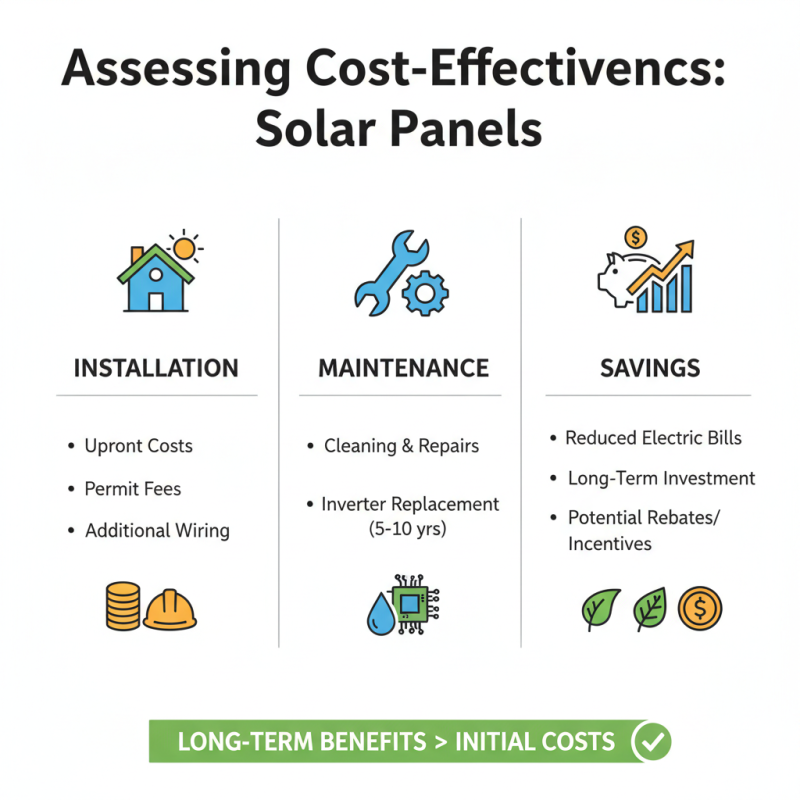
Assessing Cost-Effectiveness: Installation, Maintenance, and Savings
When assessing solar panels for your home, consider the upfront costs. Installation can be expensive, but it's a long-term investment. Many homeowners overlook the hidden fees, such as permit costs and additional wiring. These can add up quickly.
Maintenance is another crucial factor. Some systems require frequent inspections or cleaning, while others are more forgiving. Failing to maintain your panels can lead to reduced efficiency. This, in turn, impacts your savings over time. Understanding the maintenance frequency is essential for planning.
Finally, evaluate potential savings. Solar energy reduces reliance on the grid, leading to lower electricity bills. However, savings can vary based on location and utility rates. Some homeowners find their payback period longer than expected. Reflecting on your energy consumption can provide insight into your potential savings. It's wise to calculate these factors carefully before making a decision.
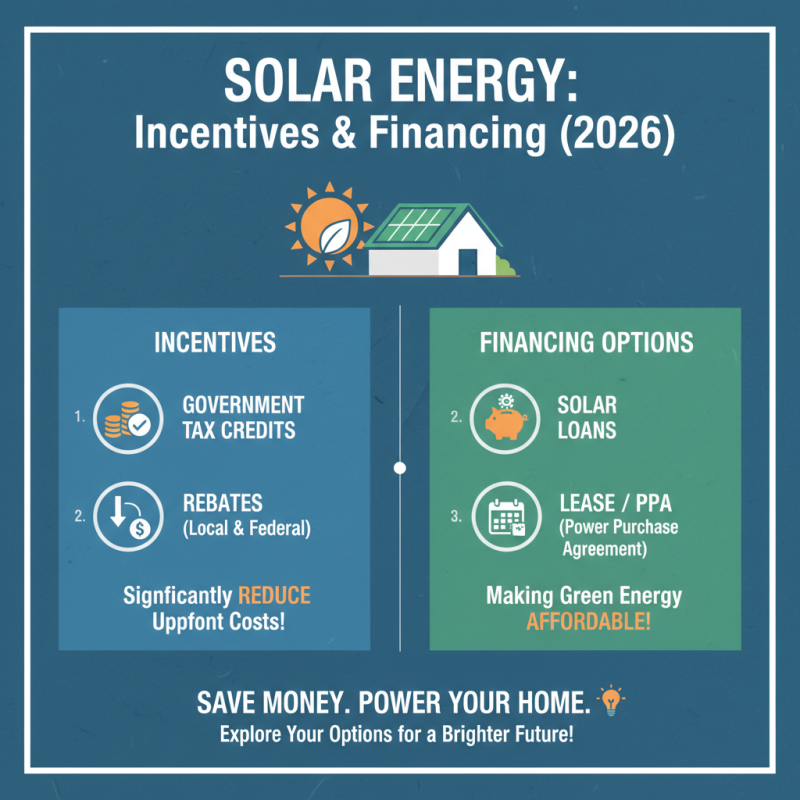
Exploring Incentives and Financing Options for Solar Energy Systems
Choosing the right solar panel system can be daunting. Homeowners must understand various incentives and financing options available in 2026. Government tax credits and rebates can significantly reduce the upfront costs. Research local and federal programs designed to support solar adoption. These incentives make green energy an attractive choice for many households.
Financing options range from loans to leasing agreements. A solar loan allows homeowners to own the system over time. This transforms the initial investment into manageable monthly payments. Leasing is another route, where you pay for the energy produced. However, ownership comes with tax benefits, while leasing may limit long-term savings.
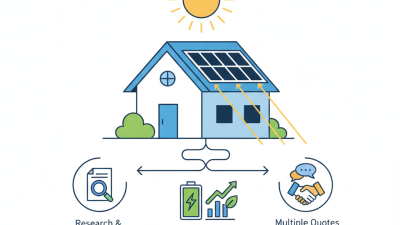
It's essential to analyze your specific needs and property. Not every system suits every home. Take into account your energy consumption, available space, and local regulations. This personalized approach will ensure that your investment is both wise and effective. The solar journey involves multiple considerations. Engage with local experts for tailored insights. Embrace the complexity of this decision to reap long-term rewards.
Choosing the Right Installer: Qualities and Certifications to Look For
When selecting a solar panel installer, it's crucial to evaluate their qualities and certifications. Look for installers with a proven track record. Evaluate their years in the industry. An established company often shows reliability. They should also offer professional certifications, such as NABCEP or equivalent, ensuring they meet high standards. This can be a deciding factor in your choice.
Communication is equally important. The best installers take the time to answer your questions. They explain the installation process clearly. Customer reviews can provide insights into their responsiveness. Some companies may excel in sales pitches, but their installation might lack quality. Don't overlook this aspect.
Beyond certifications, consider the installer’s warranties. Good warranties indicate confidence in their work. Ask about their service options for maintenance. It's essential to have support after installation. Reflecting on these points can help you make an informed choice. In the end, the right installer can significantly impact the performance of your solar panels.