The Best Ground Mount Solar Racking Solutions for Your Energy Needs?
As the demand for renewable energy rises, ground mount solar racking solutions are becoming increasingly important. Industry expert John Anderson, a solar energy consultant with over 20 years of experience, emphasizes, “The choice of racking systems can significantly affect energy efficiency.” He points out that a well-designed ground mount solar racking system ensures optimal sunlight exposure and durability.
In many cases, property owners overlook the importance of selecting the right racking solution. A poor choice can lead to reduced energy output and increased maintenance costs. Ground mount solar racking systems vary widely, each offering unique advantages and challenges. Understanding these differences is crucial for making an informed decision.
Investing in a ground mount solar racking system is not without its complexities. Property terrain, local weather conditions, and system scale are all factors to consider. Reflecting on these elements can lead to better performance and long-term savings. Exploring the best options can empower users to meet their energy needs effectively.
Understanding Ground Mount Solar Racking Systems: An Overview
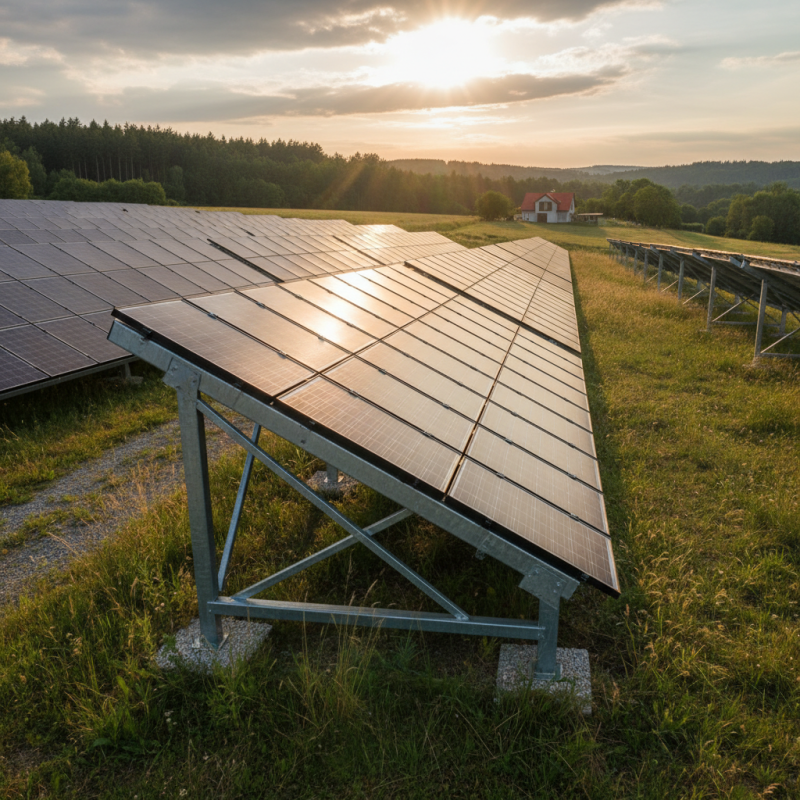
Ground mount solar racking systems are essential for solar energy projects.
They are designed to support solar panels securely at ground level. This setup is especially beneficial for large-scale installations.
According to recent industry reports, the market for solar racking solutions has grown at a compound annual growth rate (CAGR) of
20% over the past five years.
These systems come in various types, including fixed tilt and single-axis tracking.
Fixed tilt systems are simple but may not capture maximum sunlight. In contrast, single-axis trackers can be more efficient.
They adjust to the sun’s position throughout the day, increasing energy output. Studies indicate that these trackers can enhance energy production
by 25% to 35%. However, they require more maintenance and higher initial investment.
Another aspect to consider is site assessment.
Not all ground mounts fit every terrain. Soil quality, site slope, and shading from trees or buildings can impact installation.
Professionals recommend performing thorough feasibility studies to avoid costly mistakes.
Understanding local regulations is crucial; they can affect installation permits and costs.
With informed planning and execution, ground mount systems can be a robust solution for sustainable energy needs.
Types of Ground Mount Solar Racking Solutions Available Today
When it comes to ground mount solar racking solutions, several types stand out in today’s market. One common option is fixed-tilt racking, which offers a reliable way to harness solar energy. According to the Solar Energy Industries Association (SEIA), this system remains a popular choice for many residential and commercial projects. Fixed-tilt systems provide stability and ease of installation, but they may not capture optimal solar energy during varying seasons.
Another solution is adjustable racking systems. These offer more flexibility, allowing the angle of panels to be modified throughout the year. Industry reports suggest that adjustable systems can improve energy efficiency by up to 25% compared to fixed systems. However, installation complexity increases, and maintenance becomes crucial. Some users overlook the need for routine checks, causing potential performance drops.
Finally, there's the solar tracking system, which follows the sun's path. They can maximize energy output significantly. Research indicates that trackers can generate up to 40% more energy than fixed systems. Yet, they require more maintenance and can be more costly. Users must weigh the initial investment against long-term benefits, making it a challenging decision. Balancing these factors can lead to greater energy efficiency and sustainability.
The Best Ground Mount Solar Racking Solutions for Your Energy Needs
This bar chart illustrates the energy efficiency of various ground mount solar racking solutions available today, highlighting the average energy production in kilowatts per hour (kWh) for each type.
Factors to Consider When Choosing Ground Mount Racking Systems
When selecting ground mount racking systems for solar energy projects, it's essential to consider various factors. One key aspect is the terrain where the system will be installed. Sloped or uneven ground may require more complex mounting solutions. Flat, stable surfaces are generally preferable for easier installation and maintenance.
Another important consideration is the local climate. Weather conditions can significantly impact the durability and efficiency of your solar panels. Areas prone to heavy snow or strong winds may need more robust racking structures. Ensuring that your racking system can withstand potential weather-related stress is crucial for long-term use.
**Tips:** Evaluate your site's soil type. Soft soil may necessitate deeper foundations. Always check local building codes. These can dictate the design and installation process of your racking system. Finally, consider future expansion. Choose a system that can accommodate additional panels later on. This foresight can save time and resources down the line.
Installation Process for Ground Mount Solar Racking Solutions
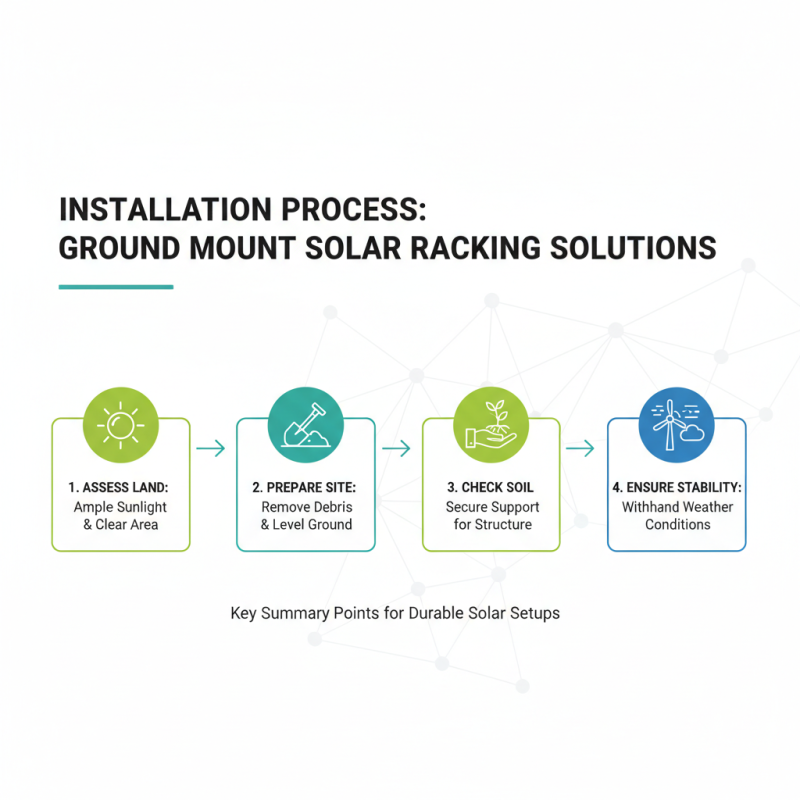
When considering ground mount solar racking solutions, understanding the installation process is crucial. Start by assessing your land. The location should receive ample sunlight throughout the day. Clear any debris or vegetation to create a flat and stable area. Soil quality also matters; it should support the structure securely to withstand various weather conditions.
After selecting a site, it’s time to gather your tools and materials. Common tools include a post hole digger, level, and concrete mix. The installation typically begins by setting anchor posts into the ground. Each post must be precisely aligned and level to ensure stability. Some installers may overlook minor adjustments, leading to uneven angles. Therefore, take extra care in this step.
Once the posts are in place, the racking system can be assembled. This stage requires attention to detail. Each connection must be tight to prevent future issues. Finally, mount the solar panels securely on the racking system. Regular checks post-installation can help identify any weaknesses. Reflecting on your methods and potential oversights ensures a reliable energy source for years to come.
Maintenance and Upkeep of Ground Mount Solar Racking Systems
Proper maintenance of ground mount solar racking systems is essential for maximizing efficiency and lifespan. Routine inspections are needed to ensure stability and integrity. According to the National Renewable Energy Laboratory, even minor maintenance can boost performance by 5-10%. Regular checks for soil erosion, structural integrity, and corrosion can prevent larger, costly issues.
Cleaning solar panels is another key aspect. Dust, debris, and moss can accumulate, reducing energy output. A report from the Solar Energy Industries Association found that dust accumulation could decrease output by as much as 20%. Gentle rinsing with water or soft brushes can often suffice. It’s crucial to avoid harsh chemicals that could damage the panels or racking.
While maintaining these systems, challenges arise. Weather events may impact stability, leading to complex repairs. Furthermore, accessibility might hinder effective maintenance. Reflecting on these hurdles can lead to improved strategies for upkeep. Awareness of potential issues allows for proactive measures instead of waiting for failures. Embracing a structured maintenance schedule is key to long-term success.