China Top Ground Mounted Solar Panels Benefits and Applications?
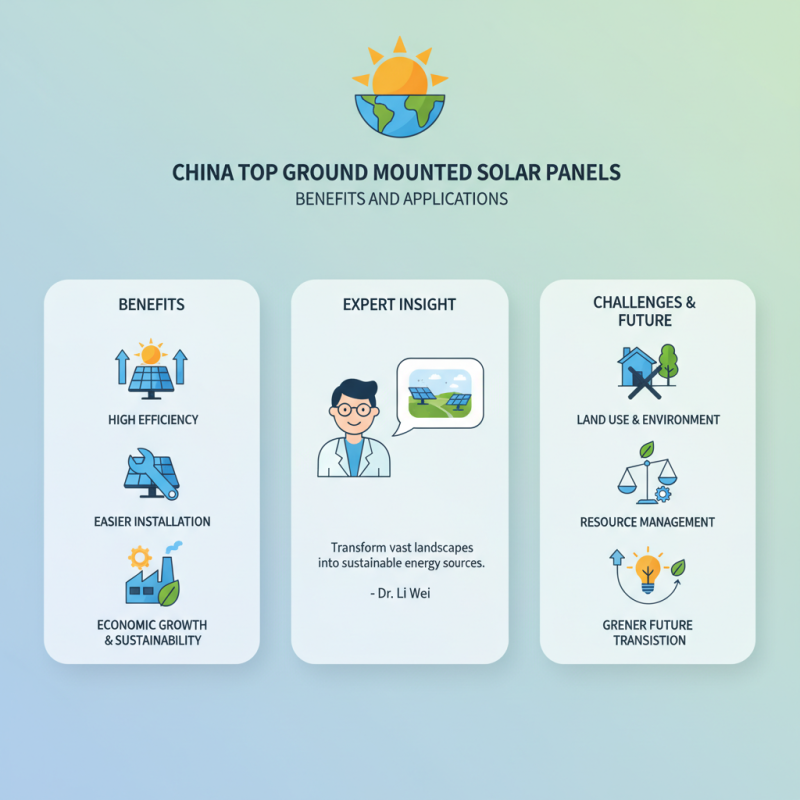
In recent years, ground mounted solar panels have gained significant attention in China's renewable energy sector. With their ability to harness sunlight on a large scale, these panels provide an effective solution for energy needs. As noted by Dr. Li Wei, a leading expert in solar energy systems, “Ground mounted solar panels can transform vast landscapes into sustainable energy sources.”
The benefits of ground mounted solar panels are manifold. They are typically more efficient than rooftop panels due to optimal positioning and sunlight exposure. Furthermore, they require less structural support, making installation easier. This technology not only promotes sustainability but also encourages economic growth in rural areas. However, challenges remain. Land use and environmental concerns must be addressed to maximize their potential.
Though ground mounted solar panels present significant opportunities, their implementation is complex. Balancing land resources with energy production needs continuous evaluation. The journey towards a greener future is fraught with learning curves and adjustments. Despite obstacles, the promise of these panels remains strong, signaling a hopeful transition toward renewable energy in China.
Benefits of Ground Mounted Solar Panels in China
Ground mounted solar panels in China bring significant benefits, especially in terms of efficiency and land use. These systems can be installed on land that is less suitable for agriculture. This means we can utilize vast areas while preserving farmlands. Ground-mounted systems often receive more sunlight than rooftop panels. They avoid shading from buildings and trees. This maximizes energy production.
The installation is also simpler. Ground-mounted systems can be adjusted to optimize the angle for sunlight exposure. This flexibility enhances performance throughout the year. Furthermore, maintenance is easier compared to rooftop systems. Technicians can access them without the risks associated with working at heights. Despite these advantages, such installations require careful planning to avoid conflicts with local ecosystems.
In China, the increase in solar energy adoption is vital for reducing carbon emissions. However, the challenges of land use and zoning regulations must be navigated carefully. Local governments need to balance energy needs with environmental preservation. The benefits of ground-mounted solar panels are clear, but it's crucial to approach their deployment thoughtfully.
Key Applications of Ground Mounted Solar Panels in China
Ground mounted solar panels have gained significant traction in China due to their versatility and efficiency. These systems are often installed in open fields, making them ideal for large-scale energy generation. They are particularly beneficial in rural areas where land is available but grid access is limited.
One key application is in agriculture. Farmers can install solar panels on their land to power irrigation systems, reducing reliance on traditional energy sources. This not only cuts costs but also promotes sustainable farming practices. Additionally, ground mounted systems can provide shade for crops, helping to regulate temperature and moisture levels.
Another important application is in utility-scale power generation. In China, vast solar farms harness sunlight on a large scale, contributing to the nation’s renewable energy goals. These facilities can generate electricity to power thousands of homes while decreasing carbon emissions. However, these projects can sometimes face challenges, such as land use conflicts and environmental concerns. It's crucial to balance solar expansion with ecological considerations to ensure long-term sustainability.
Comparison of Ground Mounted vs Rooftop Solar Systems
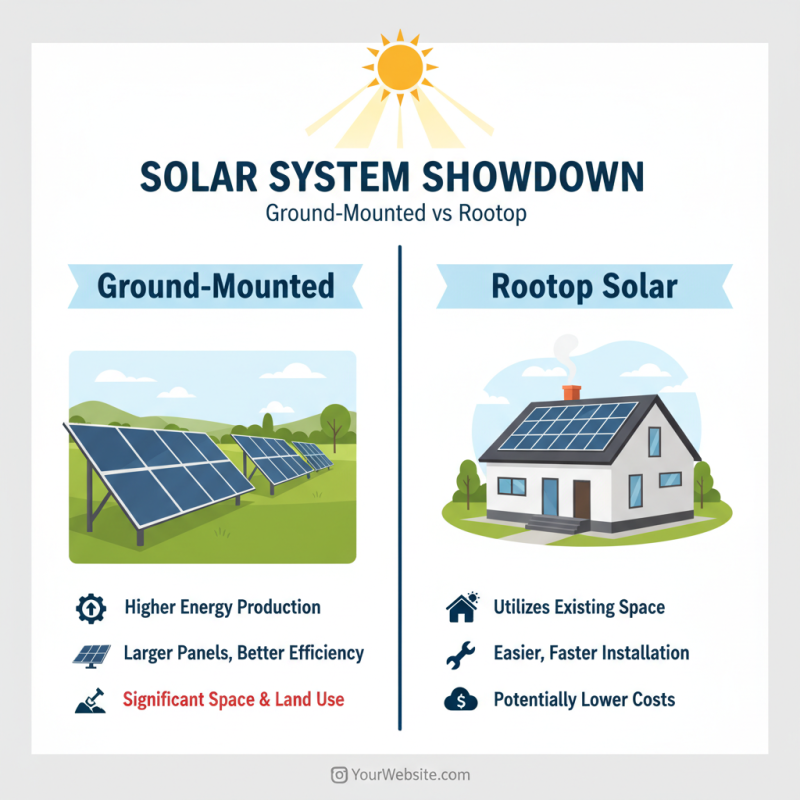
Ground-mounted solar panels and rooftop solar systems are two popular choices for renewable energy. Each has unique benefits and challenges. Ground-mounted systems typically have higher energy production potential due to more optimal placement in sunlight. They can also accommodate larger panels, which may lead to better efficiency. However, installation can require significant space, often leading to concerns about land use and environmental impact.
On the other hand, rooftop solar systems are ideal for urban settings where land is limited. They utilize existing structures, minimizing additional land use. Maintenance tends to be easier since the panels are close to the building. However, they can suffer from shading issues if surrounded by taller buildings or trees. This might affect energy output. Furthermore, rooftop systems may not be suitable for every building, particularly those with minimal sun exposure.
Both options present valuable solutions. Evaluating specific site conditions is crucial before making a decision. Ground-mounted installations can offer flexibility in scaling up capacity, while rooftop systems provide a unique blend of convenience and efficiency. Ultimately, it’s vital to assess both options based on individual needs and circumstances.
Economic Impact of Ground Mounted Solar Panels on Local Communities
The installation of ground mounted solar panels profoundly influences local communities in China. According to a 2021 report by the International Renewable Energy Agency, solar energy could stimulate local economies. The increase in job opportunities during the installation phase contributes to reduced unemployment. It’s estimated that solar energy projects can create two to three times more jobs than conventional fossil fuel projects.
However, while economic benefits are significant, there are challenges. Land utilization becomes a critical issue. Some communities may feel land is taken from agriculture or natural habitats. A balance is needed to ensure that energy generation does not hinder local farming or wildlife. Local governments must engage with communities during planning to mitigate these concerns.
Moreover, benefits extend beyond immediate job creation. Ground mounted solar systems can reduce electricity costs for local residents. Lower energy bills can free up household budgets for other essential needs. Yet, not every community sees this benefit. Areas with insufficient infrastructure may struggle to access solar power efficiencies. Careful assessment is essential to maximize advantages and address any disparities in community experiences.
Environmental Advantages of Ground Mounted Solar Infrastructure in China
Ground mounted solar panels in China present significant environmental advantages. According to the National Energy Administration, solar energy accounted for approximately 3.6% of the country's total power generation in 2022. This figure is expected to grow as China enhances its renewable energy infrastructure.
The adoption of ground mounted solar systems helps reduce greenhouse gas emissions effectively. Reports indicate that for every megawatt of solar power installed, about 2.5 million pounds of carbon dioxide emissions can be avoided annually. This contributes to China's goal of reaching carbon neutrality by 2060. Additionally, these installations often utilize land that is less suited for agriculture, minimizing conflicts over land use.
However, challenges persist. The manufacturing and disposal of solar panels produce waste, raising concerns about environmental impact. Proper recycling methods are not yet standardized. A recent study highlighted that only 10% of solar panels were recycled in China, which calls for improvement. As the country expands its solar capacity, ongoing assessments of these environmental consequences will be vital.